

What Does the Invalid CAPTCHA Error Mean? How to Solve Incorrect Captcha

Here’s the number that matters: 150 versus 3,000. Same website, same scraping pattern, same requests per minute. With regular Chrome and a datacenter IP I hit a CAPTCHA wall at 150 pages. With 1Browser and a Floppydata residential IP I went through 3,000 pages across two days without a single challenge.
That difference is why I wrote this article. If you just want to know how to solve invalid CAPTCHA once, I’ll cover that. But if CAPTCHAs are a daily problem the answer isn’t solving them faster, it’s not triggering them at all.
I do ecommerce consulting and price monitoring. That means I spend a lot of time on competitor websites looking at product pages, which means I spend a lot of time clicking on pictures of traffic lights.
Last month I hit a run of CAPTCHAs so aggressive that I was getting challenged every thirty seconds for about ten minutes straight. I solved every single one correctly and they kept coming. That’s when you know the problem isn’t your answers, it’s everything else about your session.

What Does Invalid CAPTCHA Mean (Even When You Got It Right)?
When you see “invalid CAPTCHA” or “incorrect captcha” the obvious assumption is you clicked the wrong traffic light. And sometimes you did, those images are genuinely ambiguous sometimes, is that tiny corner a traffic light or a pole?
But what does incorrect CAPTCHA mean when you’re absolutely certain your answer was correct? It means the system rejected your session, not your answer. What is a CAPTCHA error really? It’s the system saying “I don’t trust you regardless of what you click.”
The reasons this happens, and I learned these one at a time over about a year of running into them:
- Flagged IP. This is the one I figured out first because it was the most dramatic. I was on ExpressVPN trying to access an ecommerce site and I failed the same reCAPTCHA twelve times. I was starting to question my eyesight. Then I disconnected the VPN, tried on my apartment wifi, passed the first try. Same puzzle, same answer, same person clicking it. The only thing that changed was the IP. Turns out the VPN exit node I’d been on had been used by enough bots before me that Google’s system had basically blacklisted it. Every person who connects through that node inherits the reputation of everyone who came before them.
- Fingerprint mismatch. This one took me months to understand because you can’t see it happening. I was using a German proxy but my browser was still reporting my real timezone, my real system language, my real screen resolution. To the CAPTCHA system that looked like someone pretending to be in Germany, which is exactly what it was. The mismatch between where my IP said I was and where my browser said I was tanked my trust score before I even clicked the first image.
- Token expired. I got up to refill my coffee during a CAPTCHA and came back maybe six minutes later. Failed. The token has a window, apparently two to five minutes depending on the system. I didn’t know tokens had expiration times until this happened.
- Extensions blocking JavaScript. uBlock Origin broke reCAPTCHA on a specific ecommerce site for me. Not on other sites, just that one. The CAPTCHA appeared normally, I’d click all the images, hit submit, and it would say invalid. This went on for three weeks before I thought of trying disabling extensions. Three weeks of blaming the website.
- You actually got it wrong. I misidentified a bus as a truck once and felt personally offended by the feedback.
What Is a CAPTCHA Anyway? (And the Common CAPTCHA Types You’ll See)
I should probably explain what CAPTCHA actually stands for since I’ve been using the word for 400 words without defining it. Completely Automated Public Turing test to tell Computers and Humans Apart.
I looked this up again just now because I can never remember whether it’s “Public” or “Practical.” It’s Public. A CAPTCHA challenge response is the whole interaction: the website shows a puzzle, you solve it, the website decides whether to believe you.
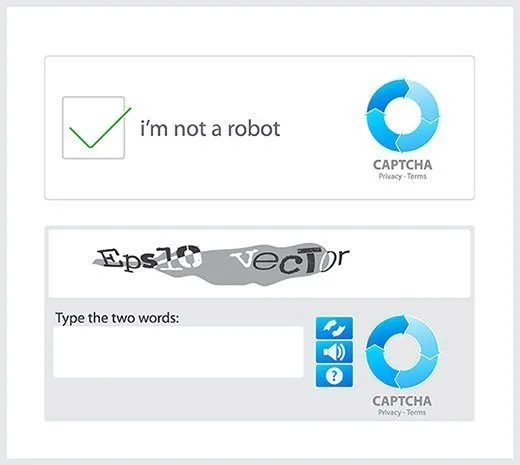
The common CAPTCHA types you’ll encounter, and these are not all created equal in terms of how annoying they are:
- reCAPTCHA v2 is the one with the “I’m not a robot” checkbox. Sometimes the checkbox alone is enough. Sometimes it sends you to image selection. Traffic lights, crosswalks, buses, storefronts, fire hydrants. I’ve been clicking fire hydrants for three years and I’m starting to wonder if I could draw one from memory. Google runs this and my completely unsubstantiated theory is that they use the image selections to train their autonomous vehicle models.
- reCAPTCHA v3 is invisible. Runs in the background, scores you 0.0 to 1.0, and if you score too low the website blocks you without explanation. You never see a challenge. You just get blocked and don’t know why. I hate v3 more than v2 because at least v2 lets you try.
- hCAPTCHA: boats, motorcycles, bicycles. Cloudflare uses it.
- Text CAPTCHAs: mostly dead except on government portals.
- Slider CAPTCHAs: common on Chinese platforms, drag a puzzle piece.
- Audio CAPTCHAs: theoretically for accessibility, practically harder than the visual ones. I’ve attempted audio CAPTCHAs maybe six times and succeeded once.
How to Solve Invalid CAPTCHA – What I Do When I’m Stuck
- Clear cookies and cache. I always try this first because it takes ten seconds and it works about a third of the time. The CAPTCHA system uses your session data to build a history of your behavior. Old cookies from a previous failed session carry that negative history forward. Wiping them is like walking back into a store wearing different clothes after getting kicked out.
- Disable every browser extension and try again. I lost three weeks of my life to this one. I had a Decentraleyes extension that I’d installed in maybe October and completely forgotten about. It was blocking the reCAPTCHA callback script on one specific ecommerce site. The CAPTCHA loaded fine visually, I’d click all the correct images, hit verify, and get “invalid” every time. I only figured it out because I tried the same site on my phone where I don’t have extensions and it worked on the first try. The embarrassment of three weeks of blaming the website when it was my own extension the whole time was significant.
- Check what IP you’re presenting. Go to any IP lookup site. If it says you’re on a datacenter IP or a known VPN exit node, that’s almost certainly why the CAPTCHA won’t let you through. I cannot stress this enough because it’s the variable I ignored the longest. The same CAPTCHA, identical answer, passes on a residential IP and fails on a datacenter IP. The system knows which IP ranges belong to servers and which belong to apartments. It treats them completely differently.
- Open Firefox if you’re on Chrome. Or vice versa. I’ve had situations where the same reCAPTCHA on the same site failed eleven times on Chrome and passed the first try on Firefox. Exact same network. The browsers produce different canvas hashes and WebGL outputs and the CAPTCHA system evaluates them separately.
- Stop trying for ten minutes. Go do something else. This sounds useless but the rate limiting on CAPTCHA systems resets with inactivity. Every time you fail and immediately retry you’re telling the system that you’re persistent in a way that real users typically aren’t. Bots retry immediately. Humans get frustrated and leave. Leaving is the human behavior the system expects.
- If you’re doing this every day, stop solving CAPTCHAs and start preventing them. Individual solutions don’t scale. I was spending twenty minutes a day on this before I changed my approach entirely. The next section is about that.
How I Went from Twenty Minutes of Daily CAPTCHAs to Zero
The 150 versus 3,000 number from the top of this article came from a test I ran last month, but the reason I ran the test is because a colleague had been telling me for weeks that I was doing everything wrong. He watched me click through CAPTCHAs one afternoon and asked why I wasn’t using an antidetect browser. I told him I didn’t know what that was. He pulled up his screen and showed me his setup.
He was using 1Browser. Each browser profile had its own fingerprint, its own cookies, its own proxy, its own timezone, its own language settings. I asked him how often he got CAPTCHAs. He said he couldn’t remember the last time. I didn’t believe him. So I set up the same thing on my machine that afternoon and ran my usual scraping job through it.
On regular Chrome with a datacenter IP I’d been hitting CAPTCHAs at page 150 like clockwork. Through 1Browser with the built-in proxy I got to about 900 pages before seeing one. That alone was a massive improvement but my colleague said I was still using the wrong kind of IP.
He told me to try Floppydata for residential IPs. These are IPs from actual household internet connections, not servers. The difference matters because CAPTCHA systems maintain databases of which IP ranges belong to datacenters and they treat traffic from those ranges with immediate suspicion. A residential IP looks like someone browsing from their apartment.
There’s nothing to flag. I plugged a Floppydata residential IP into my 1Browser profile and ran the same scraping job again. 3,000 pages. Two days. Not a single CAPTCHA. I messaged my colleague and told him he was right and he replied with a thumbs up emoji which I felt was an inadequate response to what was genuinely a life-changing discovery for my daily workflow.
The fire hydrants are gone. I went from twenty minutes of daily CAPTCHA clicking to none. Not because I found a better CAPTCHA solving service or a faster way to click traffic lights. Because the traffic lights stopped appearing. My colleague asked if I missed them. I kind of do. Actually no I don’t.