
How to Access Websites, Messengers and Social Media in Turkey Without a VPN

The tool is 1Browser. Download it, create a profile, pick a German proxy, launch. Everything that Turkey blocks or throttles loads at normal speed. If that’s all you needed, you’re done.
The rest of this article explains what Turkey actually does to the internet and why this approach works when VPNs turn into green checkmarks that deliver nothing.
The Setup (I’m Putting This First Because Most People Just Need This)
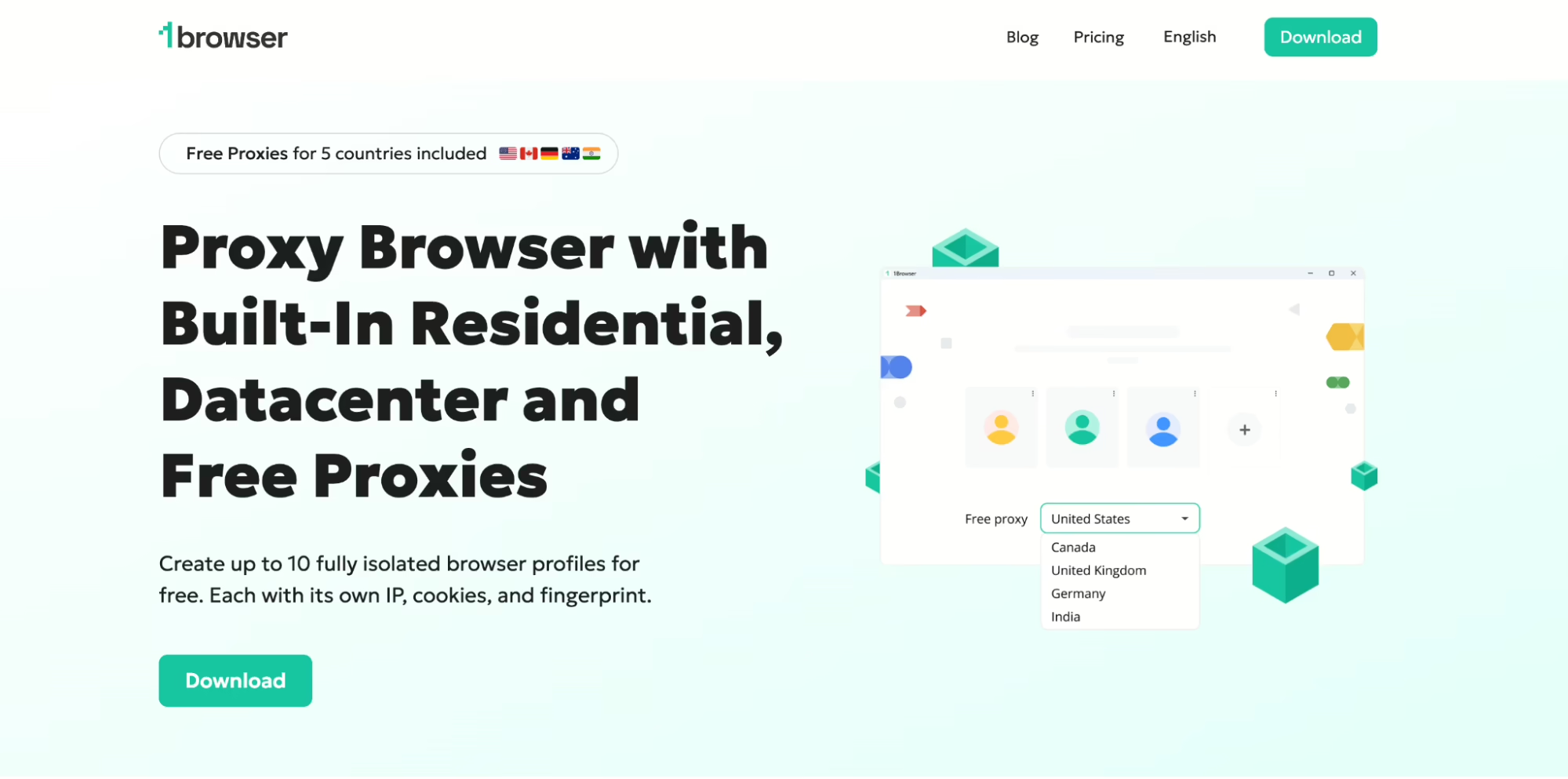
- Download from 1browser.com. I did this at a coworking space in Karakoy during my second Istanbul trip. The wifi there was provided by Turkcell Superonline which is one of the ISPs that do the throttling, so the irony of downloading a circumvention tool through the same ISP that creates the need for it wasn’t lost on me.
- Free account, no card. I’d just burned through three VPN subscriptions that month and the idea of entering yet another credit card number on a Turkish wifi network was not appealing.
- Create profiles and name them by use case. Mine are “x-timeline”, “telegram-web”, “instagram”, and “general”. Pick a US or Germany Proxy. I tested both from Istanbul and Germany was slightly faster, probably due to geographic proximity, though a Turkish developer at the coworking space disagreed and said he got better speeds through the US. We never resolved this argument. He uses Germany now anyway.
- Launch. Chrome opens. I went straight to X because that’s what I’d been trying to load for three hours through my VPN. It loaded in about two seconds. Normal speed. I sat there for a moment because I genuinely didn’t trust it, refreshed the page, loaded a different tweet, opened Instagram in another tab. Everything worked. Meanwhile my VPN was still technically connected in the background, green icon and all, doing absolutely nothing useful. I closed it. Hadn’t opened it since.
Ten free profiles, proxies in five countries, no card. $9/mo for more including Turkish proxies if you need to appear local from outside Turkey. The group from that coworking space in Karakoy, about seven people, all run this now.
One of them manages multiple client social media accounts through separate profiles so client accounts never share a fingerprint. During the September 2025 throttling event he was the only person in the room still working normally.
What Turkey Actually Does to the Internet (Sites and Apps Banned in Turkey)
Now the context. I’ve worked in Vietnam where things stay blocked permanently and I’ve worked in Russia where the government just turns off entire platforms and leaves them off. Turkey does something I hadn’t seen before.
Everything is fine. Social media works, messaging apps work, you’d think you were in Germany. Then the İmamoğlu thing happened in March 2025 and by that evening my hotel room internet felt like 2005. X was crawling. Instagram images loaded in pieces from the top down like a dial-up JPEG.
Telegram wouldn’t connect at all. WhatsApp messages sat unsent with a single grey checkmark for hours. This lasted about 42 hours and then everything just came back. September 2025, CHP headquarters situation, same pattern. Works, breaks, works again. You start to develop a sixth sense for when it’s about to happen but you’re never actually right about it.
The permanent block list is something else entirely and the numbers are hard to process the first time you see them. A colleague sent me the İFÖD report over coffee at a place near Galata Tower and I read the summary on my phone while my latte got cold.
1.5 million websites and domain names blocked. Not pages, domains. Through over 1.28 million separate court and administrative orders. They added 232,000 in 2025 alone, which my colleague said was actually lower than he expected given how the year went politically. Freedom House has Turkey at 31 out of 100, which is the worst in Europe.
Most of the permanent stuff is gambling, adult content, Kurdish media outlets, and political content that courts ordered removed under Article 8/A, which is a provision in the internet law that was meant for national security situations but gets used for basically everything now.
| Platform | Normal Days | During Crises | Block Method |
| X (Twitter) | Works | Throttled + accounts blocked | Bandwidth + court orders |
| Works (blocked 9 days Aug 2024) | Throttled | Bandwidth | |
| Telegram | Works | Fully blocked | Protocol-level |
| YouTube | Works | Throttled, DNS-blocked on TurkNet | Mixed |
| Works | Throttled | Bandwidth | |
| Varies by ISP | Varies | DNS | |
| Wikipedia | Works (was blocked 2017-2020) | N/A | Lifted |
| Gambling | Permanently blocked | Always blocked | DNS + IP |
What messengers are blocked in Turkey? Right now, mid-2026, none permanently. Telegram works on normal days but was fully blocked during the March 2025 protests.
WhatsApp works but got throttled during both 2025 crises. Signal same. How to unblock Telegram in Turkey isn’t a question about today – it’s a question about the next crisis. Because there will be one. There always is.
How to unblock Reddit in Turkey: honestly this one is confusing even to me. Reddit works on some ISPs and not others and I’ve never been able to figure out the pattern. I was at the Karakoy coworking on Turkcell and Reddit loaded fine.
The developer sitting across from me was on Turk Telekom and it didn’t. Same building, same afternoon. He pulled up his DNS settings to check and they were default, nothing weird. The next day he worked and mine didn’t. I stopped trying to understand it.
A proxy for Turkish internet access makes the whole ISP lottery irrelevant because you’re not touching Turkish DNS at all. That’s the fix. As for why it’s intermittent – I don’t have an explanation, and I’m not sure anyone does
Something the Turkish developer mentioned to me over lunch one day that I can’t stop thinking about: starting November 2026, social media users in Turkey will apparently need to log in through the government’s e-Devlet portal with their Turkish ID number.
He showed me the İFÖD report on his phone where they called it a potential “massive chilling effect” on political speech and then he locked his phone and said “I’ll worry about that in November.” I asked what he’d do if it actually happened and he shrugged.
I don’t know what it means for proxy browser usage either. Nobody seems to. But it’s the kind of thing that makes you wonder how different Turkey’s internet is going to look in two years versus now.
Other Tools I’ve Tested in Turkey
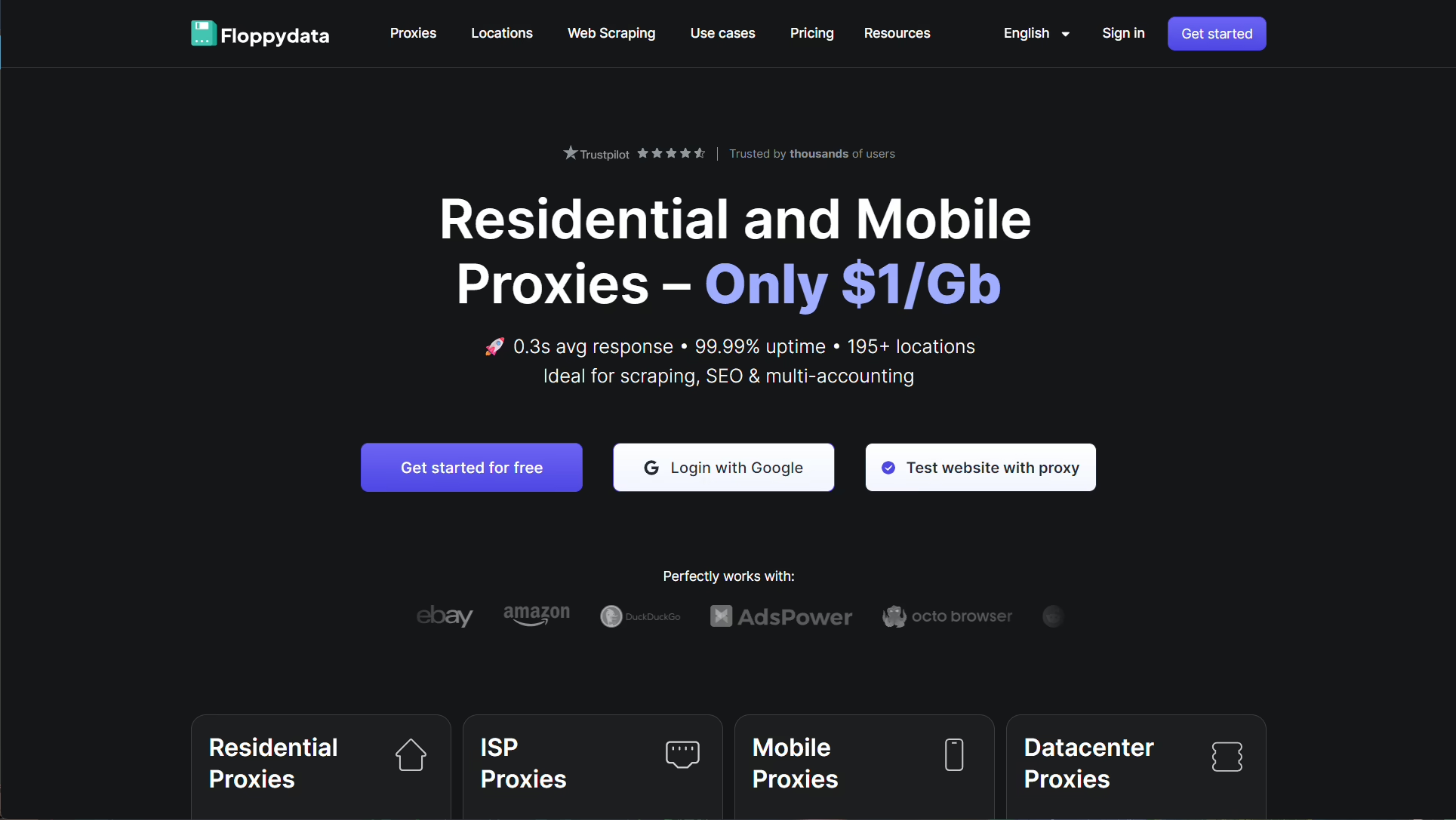
Floppydata: I brought this in for one specific situation. A client needed to see how their website looked to users inside Turkey and I was sitting in Turkey at the time but needed a residential Turkish IP, not my hotel’s commercial one.
Floppydata is a residential proxy provider and I routed a 1Browser profile through their Turkish residential IP. The page loaded exactly as a local user would see it, including the localized pricing and Turkish payment options that don’t show up on non-Turkish IPs.
Cost me about $12 across a week because I kept the profile running for a few other tests too. For the usual use case of getting past Turkish blocks you don’t need Floppydata at all – 1Browser’s free proxies handle that. Floppydata is for the reverse direction.
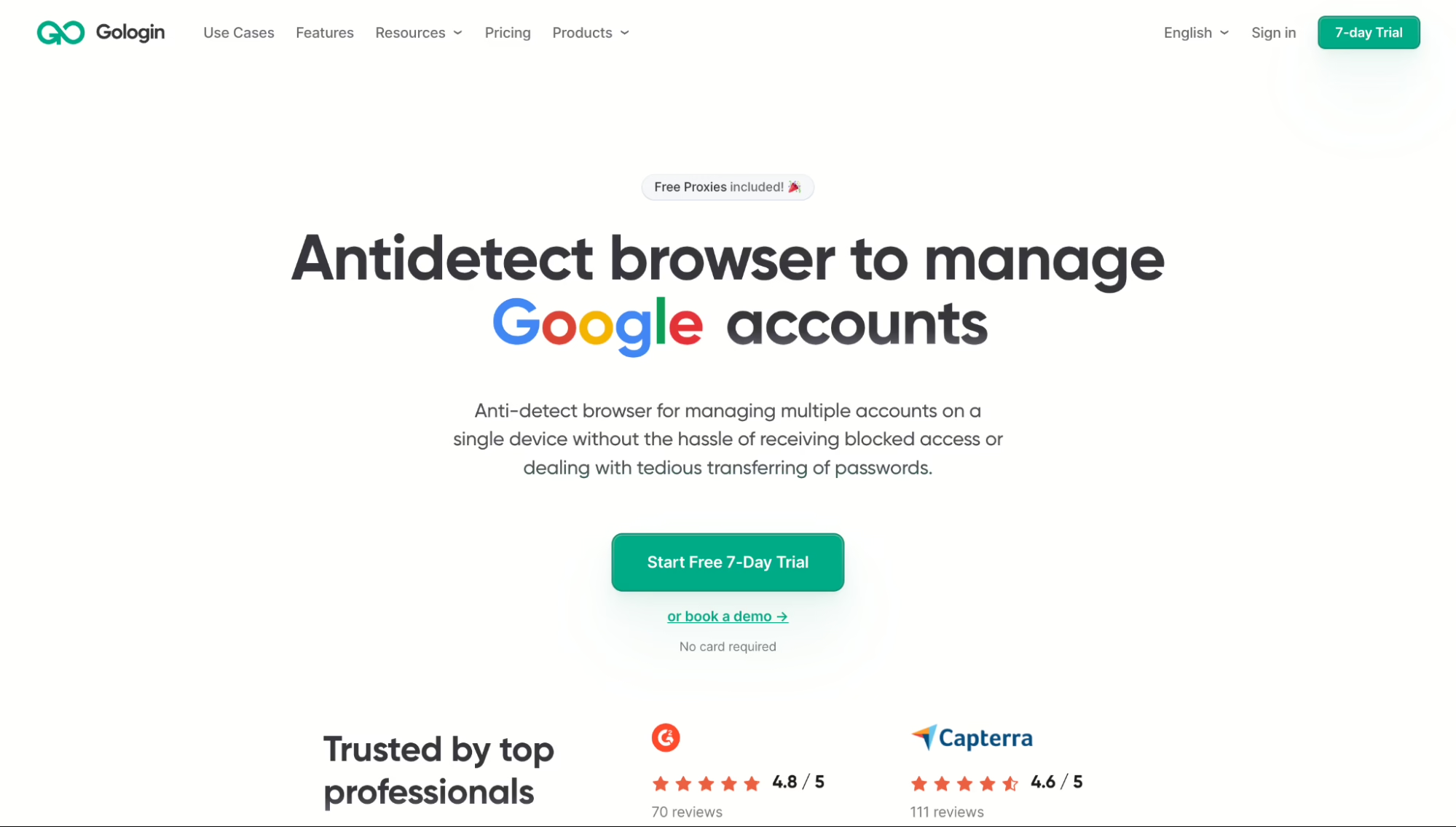
Gologin: tested for two weeks. Cloud profiles are useful for bouncing between Karakoy and a client’s office in Levent, about forty minutes by metro on a good day, closer to an hour if the Marmaray is doing that thing where it stops between stations for no reason.
Blocked content loaded fine. Shared proxy pool between all users, which is the usual Gologin concern. $24/mo, 3 free profiles, Turkish interface. Bring your own proxies for client work.
What I’d Tell Someone Going to Istanbul Next Week
- You need things to work when the government decides they shouldn’t: 1Browser. The Karakoy coworking group tested this live during both 2025 crackdowns. Seven people, all on 1Browser, all still working while the VPN users around them were refreshing the same page over and over hoping it would eventually load. It didn’t. Ten free profiles with proxies.
- Residential IPs for the reverse situation, appearing Turkish from outside Turkey: Floppydata routed through 1Browser. Niche but I needed it once and it worked.
- Cloud sync between Istanbul locations: Gologin. Bring your own proxies. Watch out for the Marmaray delays.
I keep my profiles from that Karakoy coworking session open every morning in Istanbul. I don’t check whether the internet is normal or throttled before opening them because it stopped mattering the day I set them up.
Some mornings X loads in two seconds through the proxy and also in two seconds without it and the proxy was unnecessary. Other mornings X doesn’t load at all without the proxy and loads in two seconds with it. Both mornings look identical from my side of the screen. That’s what I wanted. That’s what 1Browser gave me.
The profiles are fifteen months old now. I think about Turkey’s internet situation approximately zero times per trip, which is a significant improvement over the March 2025 experience of thinking about it every twenty minutes for two straight days.