

Best Rotating Proxies of 2026: Rating from 1Browser

The idea for this article came about when I was searching for a decent rotating proxy provider and realized two things:
- There are few comparison articles out there that provide and focus on more than raw numbers.
- Actually conducting it meant trying to make sense of a lot of competitors who offer very similar services.
So, I decided to wade past the indistinguishable marketing copy and save everyone else the trouble. The result is a list of providers based on what would actually influence someone’s buying decision. One person reading this might need fine-tuned rotation control. Another may benefit more from access to dependable, clean IPs even if that means paying more.
Either way, this is an in-depth look at a baker’s dozen of rotation proxies I’ve determined are worth your time.
But first, the stats.
The Best Rotating Proxies at a Glance
| Provider | IP pool size | Coverage (countries) |
Uptime | Starting prices | Trials |
| Floppydata | 65M+ total | 195+ | 99.9% | $1/GB residential, datacenter, and mobile | $1 trial |
| Bright Data | 400M+ residential
7M+ mobile 1.3M+ datacenter |
195 | 99.9% | $8/GB residential and mobile $0.60/GB datacenter |
7-day free |
| Oxylabs | 175M+ residential
7M+ mobile 45K+ datacenter |
195+ | 99.9% | $6/GB residential $7.50/GB mobile $0.59/GB datacenter |
5 free datacenter IPs |
| Decodo | 115M+ residential
10M+ mobile 500K+ datacenter |
195+ | 99.9% | $4/GB residential $7/GB mobile $0.70/GB datacenter |
Free, data capped |
| SOAX | 155M+ residential
33M+ mobile 300K+ datacenter |
195 | 99.9% | $3/GB | $1.99 for 450MB, valid for 3 days |
| IPRoyal | 32M+ residential
4.5M+ mobile 400K+ datacenter |
195+ | 99.9% | $1.75/GB residential
$10.11/GB mobile $1.35/IP datacenter |
Free for business |
| NodeMaven | 30M+ residential
10M+ mobile |
150+ | 99.99% | $4.25/GB residential and mobile | $3.50 for 1GB of test traffic |
| DataImpulse | 90M+ residential
16M+ mobile 20M+ datacenter |
195+ | 99.9% | $1/GB residential $2/GB mobile $0.50/GB datacenter |
$5 testing tier |
| Infatica | 35M+ residential
1M+ mobile 500K+ datacenter |
195 | 99.9% | $4/GB residential
$8/GB mobile $1/IP datacenter |
$4 for 1GB of test traffic |
| Webshare | 80M+ residential | 195 | 99.97% | $3.50/GB residential | 10 free datacenter proxies with 1GB monthly limit |
| Rayobyte | 40M+ residential
7M+ mobile 770K+ datacenter |
163 | 99.99% | $3.50/GB residential $1.25/GB mobile $0.30/GB datacenter |
50MB free datacenter proxy traffic |
| Byteful | 35M+ residential
6M+ mobile |
195 | 99.9% | $3.25/GB residential $2.25/GB mobile $2.50/IP datacenter |
1GB free residential traffic |
Methodology: How I Ranked These Providers
After comparing providers side by side and reviewing both their published specifications and day-to-day usability, I quickly realized that the raw data laid out in the table doesn’t offer much value if taken out of context. More IPs or better coverage might coincide with better placement, but those aren’t the deciding factors. My ranking was ultimately influenced more by the following:
- IP quality and trustworthiness
-
- Usability – Whether I found the dashboards, tools, etc., straightforward, and whether they allowed for finer control.
- Proxy ecosystem – Does the provider offer a healthy mix of proxy types, or do they specialize?
- Rotation flexibility – The degree to which users have control of proxy rotation. Includes rotation intervals and sticky session handling
- Speed and stability
- Pricing and scalability
- Workflow fit – Determines what a provider excels at. The best fit for small businesses might not be adequate for enterprise clients and vice versa.
The Best Rotating Proxy Service Providers
1. Floppydata
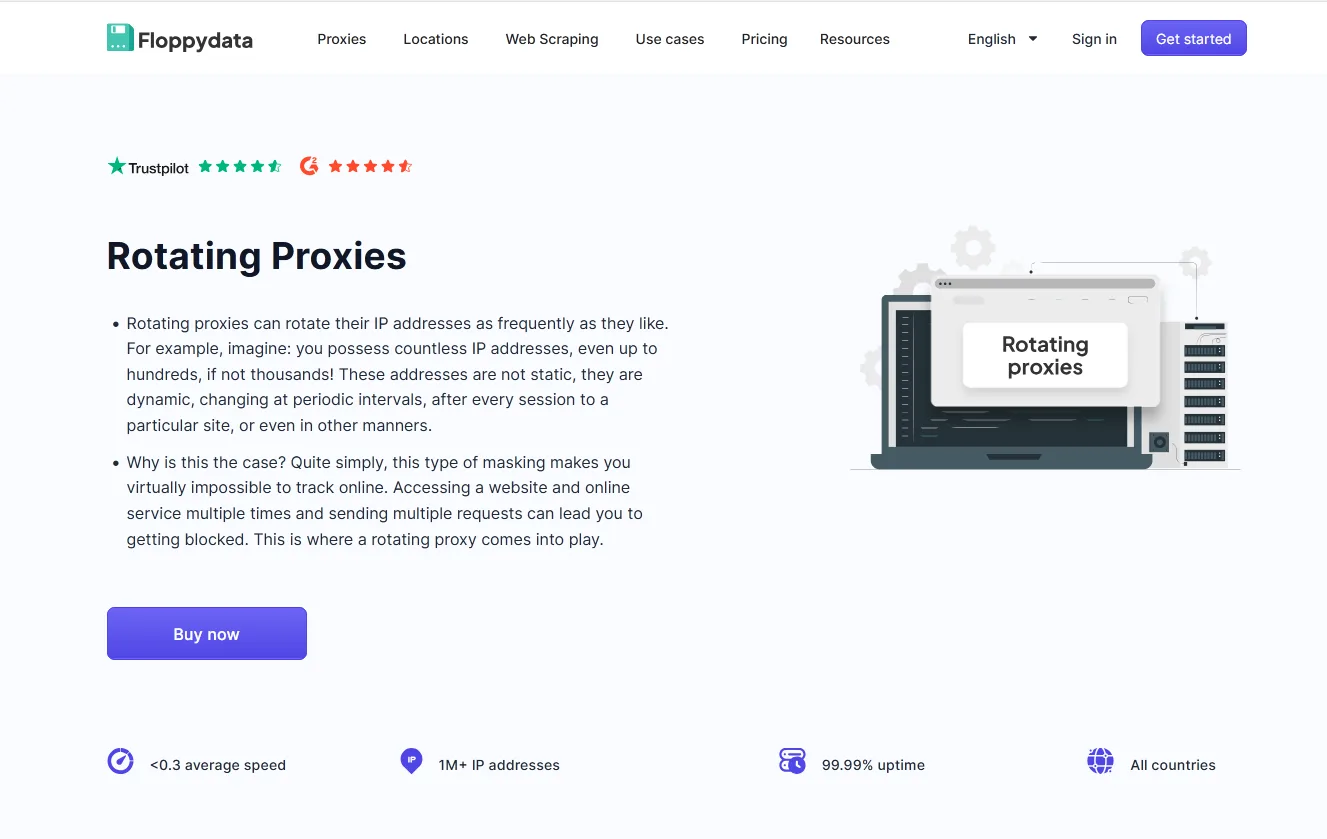
As you descend down the list, you’ll see that I included many providers who excel at different niche cases. However, I chose Floppydata as the overall winner because it nails flexibility better than the rest in practically every aspect.
While the emphasis is on the best rotating residential proxies, you get straightforward access to all four rotating proxy types from a sizable pool of clean IPs. I found the interface to be among the cleanest and most straightforward, and I could test their proxy efficacy before paying anything.
Affordability was another factor – no other provider offers these kinds of rates for mobile and residential proxies. But more importantly, Floppydata lets you set different rotation intervals rather than lock you in. You might not know what scale you’ll be operating at or what rotation strategy you’ll need in six months. Since Floppydata can accommodate you either way, you don’t need to.
2. 1Browser
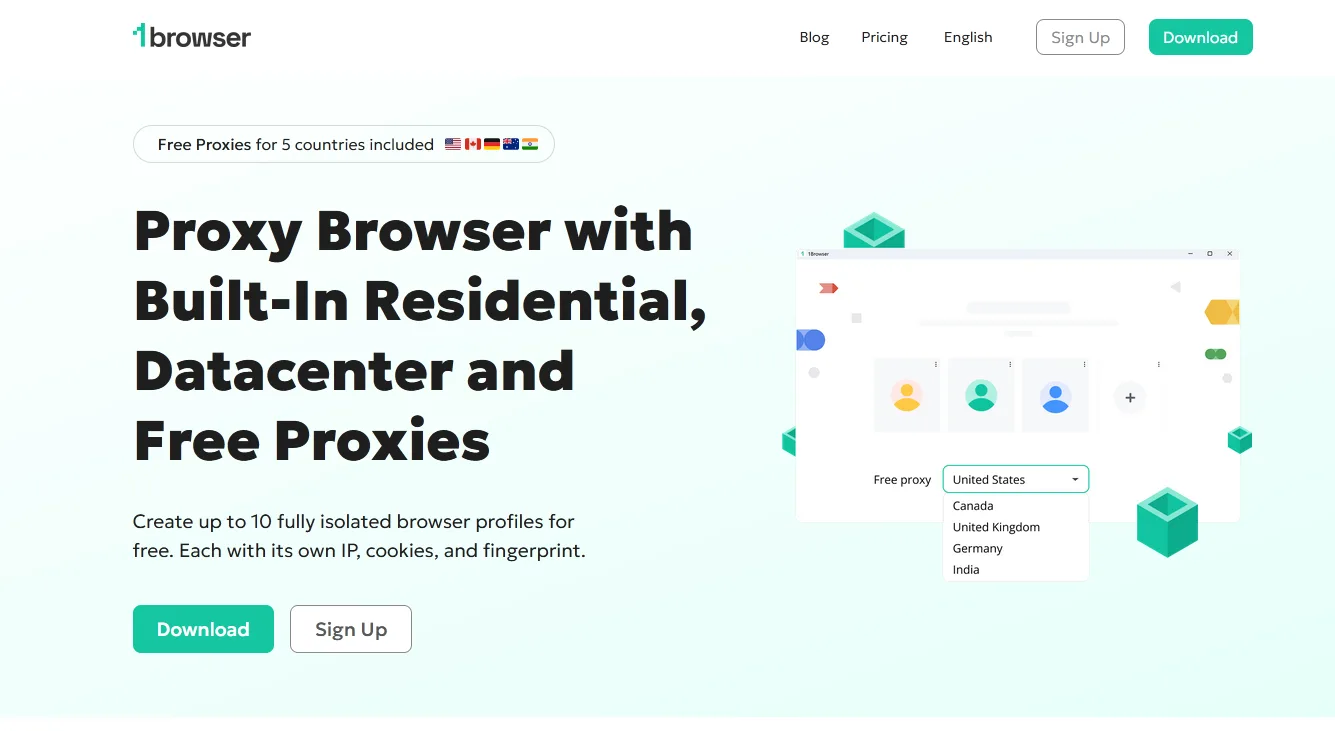
1Browser isn’t a conventional proxy provider like all the others, but I chose to include it due to several strengths.
First, it does come with competent rotating proxy options. You can try out free proxies from five countries to get your bearings and then switch to rotating residential, mobile, or datacenter proxies without having to search for alternatives.
While this is genuinely useful, 1Browser is even better used as a supporting tool whether you use the accompanying proxies or not. It’s an antidetect browser that creates separate profiles for different accounts.
Even with regular rotation, the IP addresses proxy providers supply may not be enough for more complex needs like simultaneously running ad campaigns for several clients, QA testing, or localization. Apart from a separate set of rotating proxies, each 1Browser profile also gets distinct cookies, browser and hardware fingerprints, and isolated sessions.
3. Bright Data
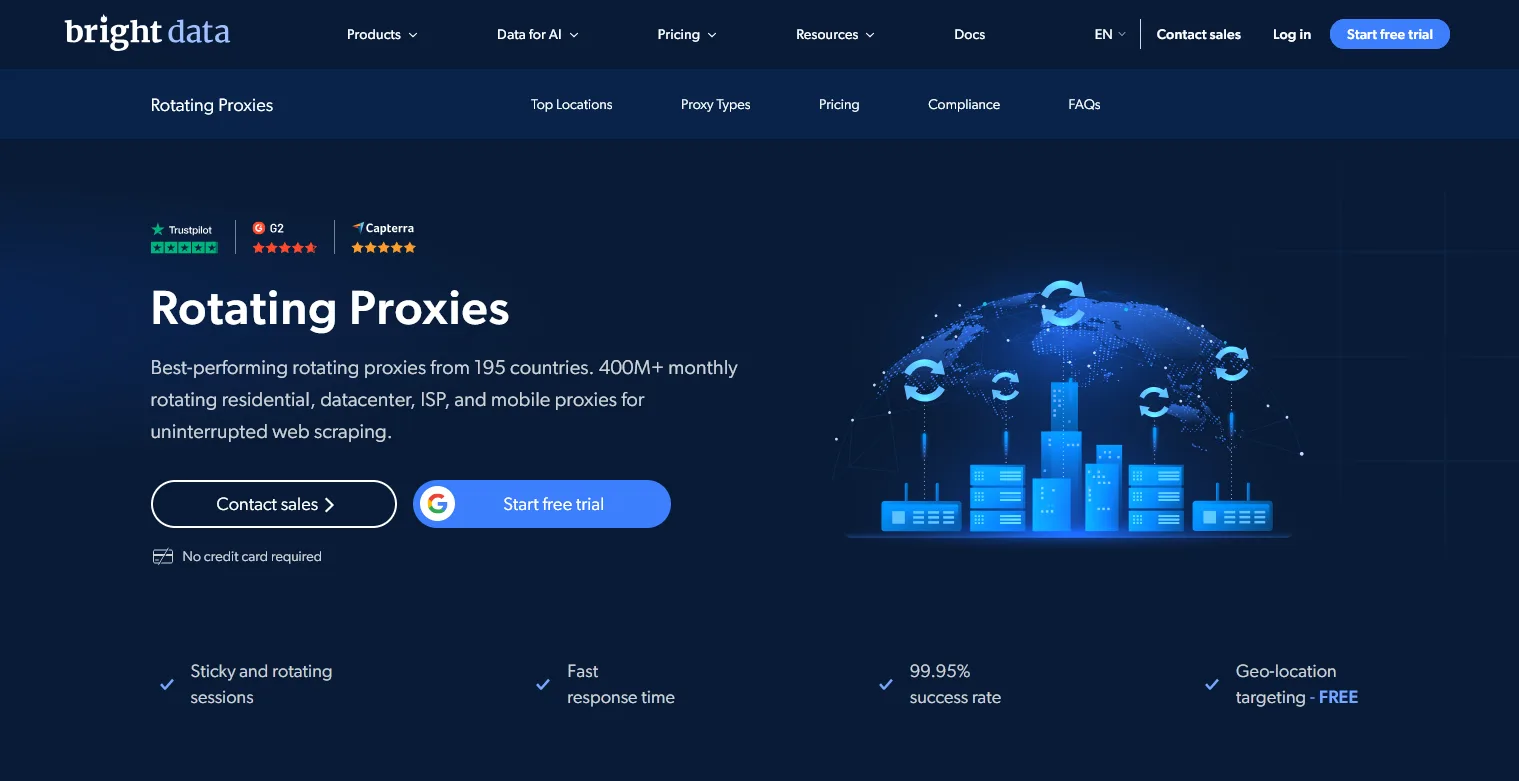
While having the largest IP pool around does help, that’s not the main reason I placed Bright Data so high up. Rather, it’s here because of the exceptional granularity advanced users can take advantage of when configuring proxy rotation.
Many lesser providers let you enable changing IPs and leave it at that. Bright Data offers active rotation management instead. You can switch between rotating and sticky sessions as needed or integrate rotation into APIs for advanced automation.
The question is, do you need to? Bright Data is an enterprise-first provider, which I got to experience first-hand when going through the signup process. It also charges enterprise-grade rates.
4. Oxylabs
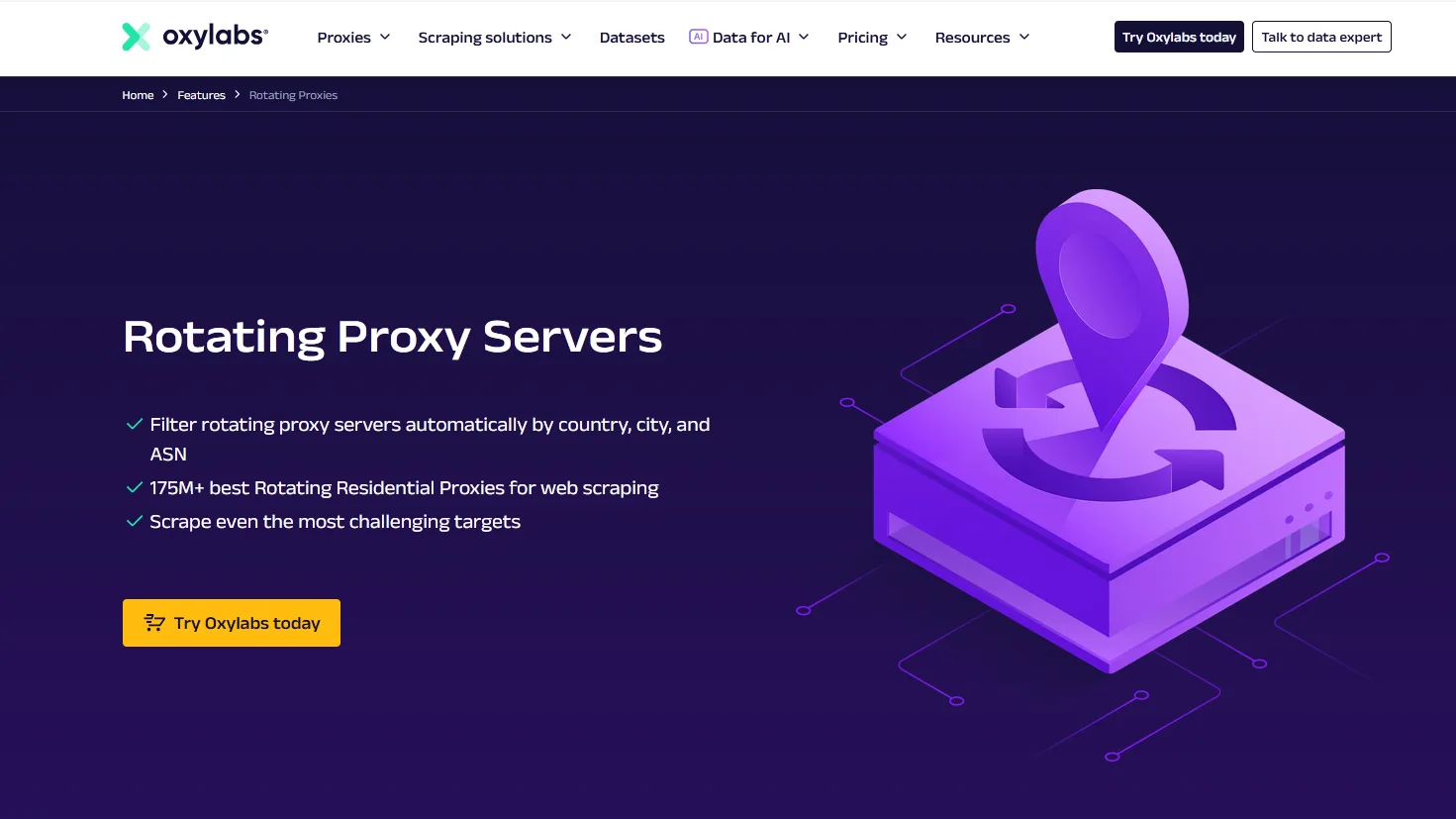
Reviewers usually compare Oxylabs and Bright Data head to head to determine a winner. In my experience, the choice is more nuanced since each provider offers an advantage that matters more to different enterprise clients.
Oxylabs might not offer as many in-depth tools, but it balances things out with excellent success rates. It’s known for reliable rotating residential proxies that are trustworthy and maintained well. Whether the extra reliability justifies the premium pricing is something I can’t decide for you.
5. Decodo
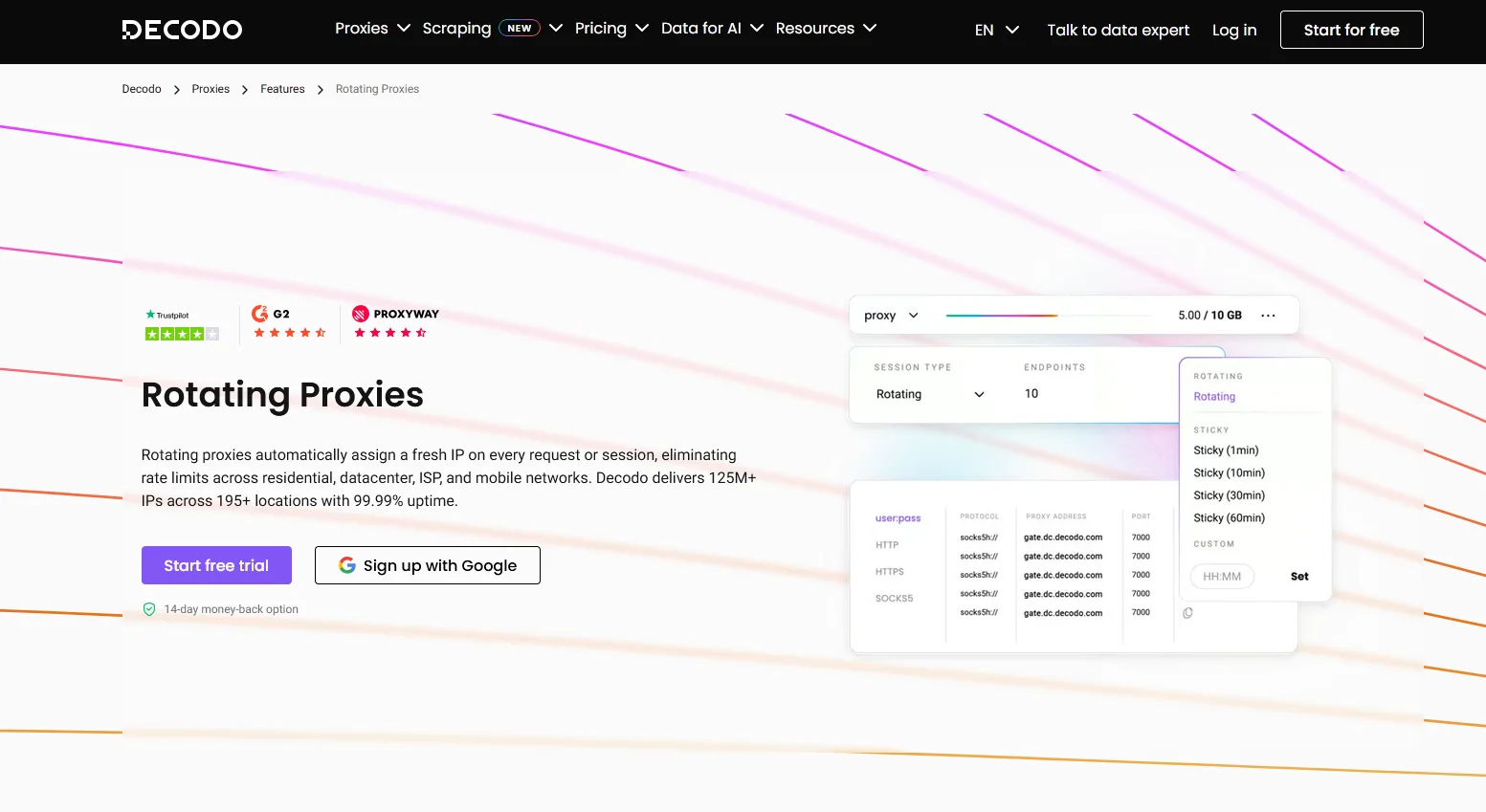
Since its rebrand, Decodo has boosted its core proxy business with add-ons like AI tools and site unlockers. I previously pointed out that this makes the new dashboard not as intuitive. That said, it’s still an excellent choice if you need stable residential rotation and anti-botting measures for accessing e-commerce sites.
Despite a slightly steeper learning curve, I’d also argue it’s a better all-around choice now. Beginners can still start with basic proxy rotation but can now dabble with automation and APIs without paying Bright Data-like prices.
6. SOAX
SOAX is a strong contender for the best rotating proxy service if you need it for localized testing. Its IP pool rivals other well-known providers, and it’s considerably cheaper than enterprise-grade options.
What I like best about SOAX are the in-depth filters. It’s not better than Oxylabs at targeting specific cities, ASNs, or providers. However, you’ll appreciate how straightforward these are to change if you have to check what local SERPs look like in ten different cities in a row.
7. IPRoyal
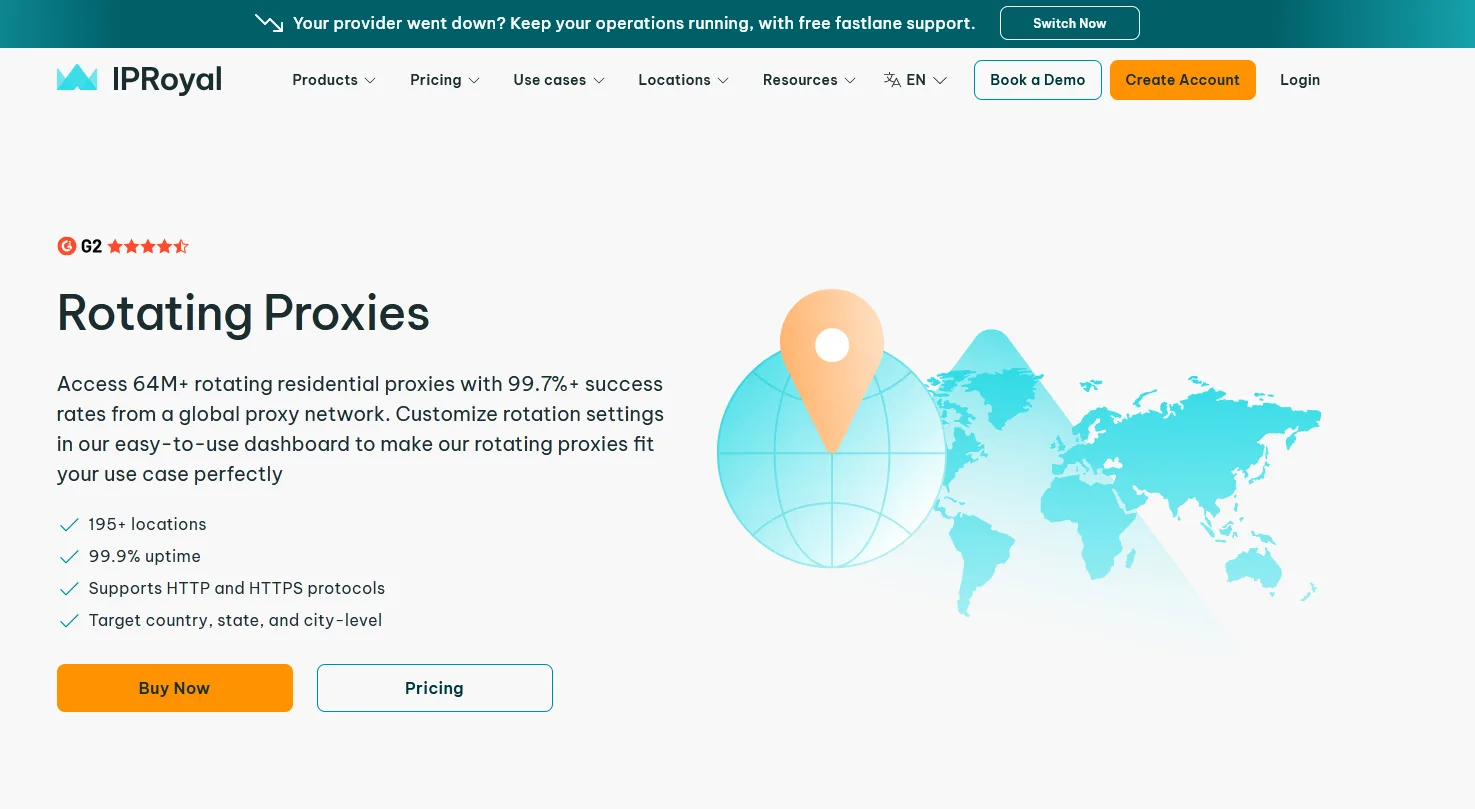
IPRoyal is proof that IP rotation services don’t need to be aggressive with their toolkit to be viable. I found that the UI isn’t cluttered and works best for small-scale operations. This is also reflected in the pricing, as IPRoyal is among the more affordable providers on the list.
The only drawback I’d consider is how connection speeds achievable through IPRoyal’s proxies vary more per location than competitors who are higher up.
8. NodeMaven
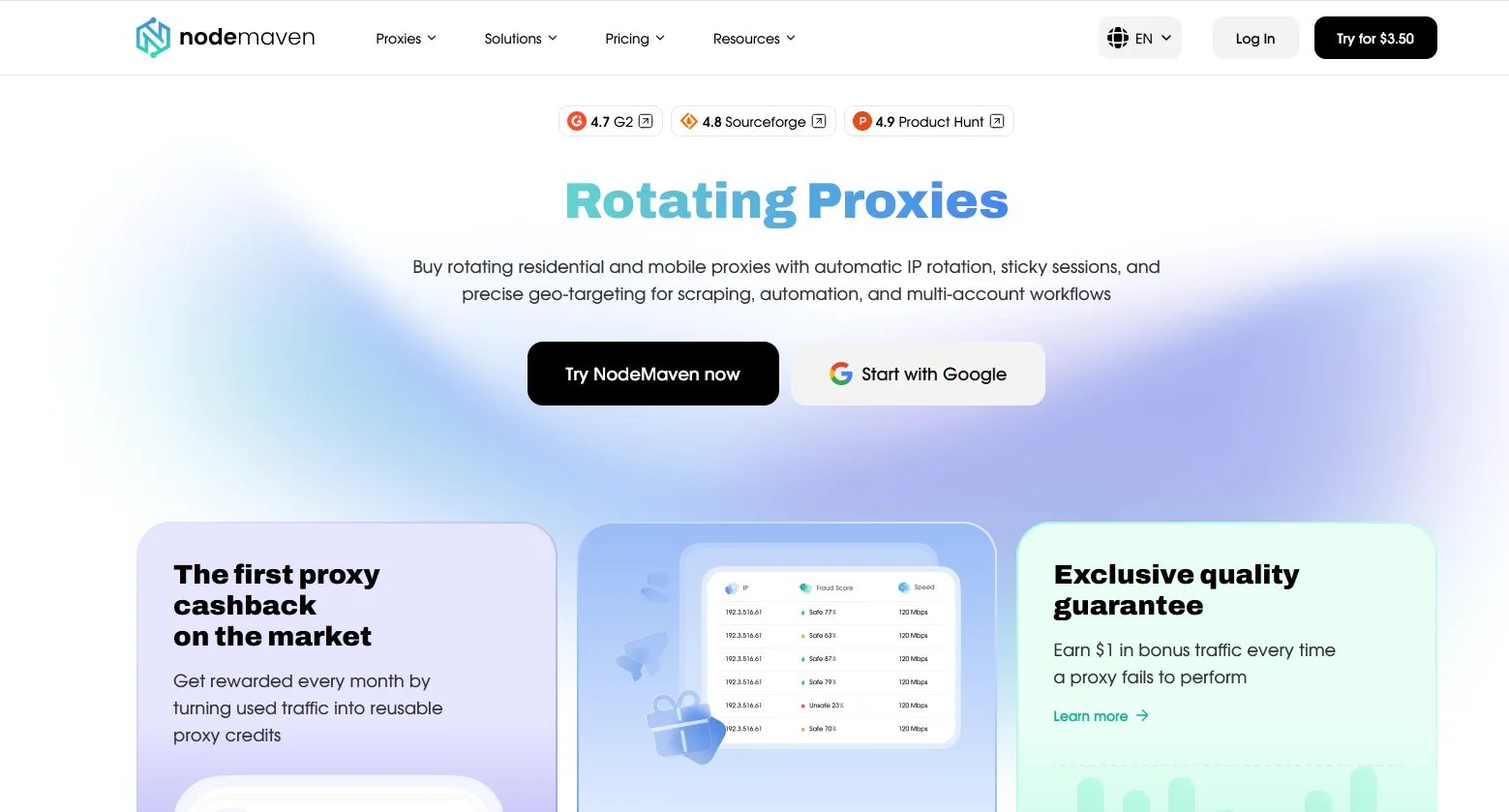
I appreciate how NodeMaven is carving out a niche for itself in a space where distinguishing between providers can be tricky. It focuses only on mobile and residential proxies in fewer countries than my other suggestions, and the pricing model isn’t the most competitive.
In return, you’re getting access to stable, curated IPs with above-average success rates. It doesn’t necessarily matter that a pool is smaller if every IP the proxy rotates to is equally effective at passing CAPTCHAs and other annoying roadblocks.
9. DataImpulse
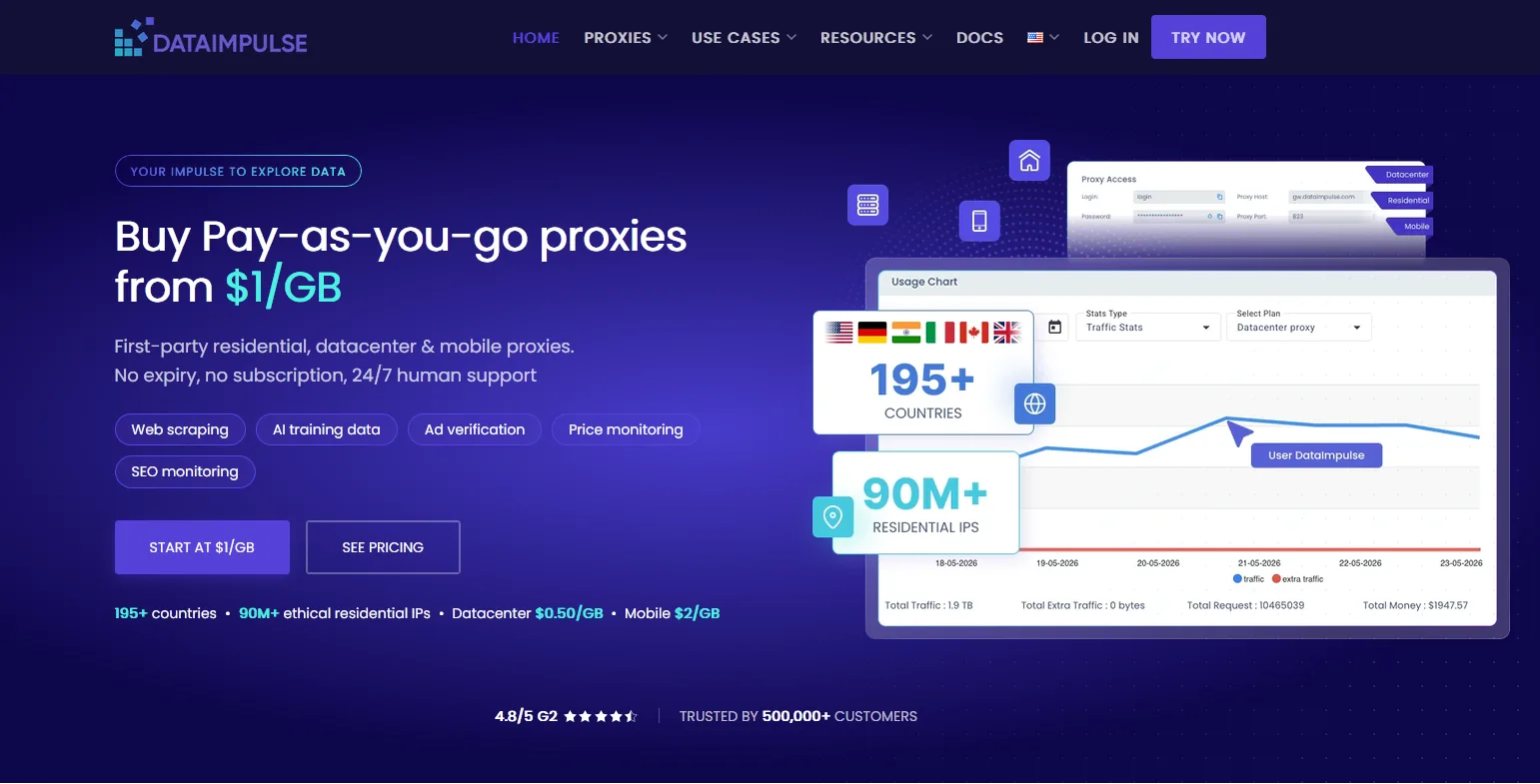
Interestingly, DataImpulse approaches the same problem from almost the opposite angle. It’s a cheap rotating proxy provider that offers one of the larger IP pools out there. Unlike NodeMaven, I’d use it in situations where the bandwidth of IP traffic at a reasonable price trumps individual IP quality.
For example, it’s a good fit for retailers comparing competitor prices across thousands of categories or when checking SEO rankings for thousands of keywords.
10. Infatica
Infatica is one of the most straightforward entries on the list. It caters to mid-sized companies like established e-commerce brands or marketing agencies. Infatica provides most of the oomph the likes of Bright Data and Oxylabs offer, but without the financial commitment or expertise requirements.
I realize that this might sound boring, but reliability and predictability are powerful features in their own right.
11. Webshare
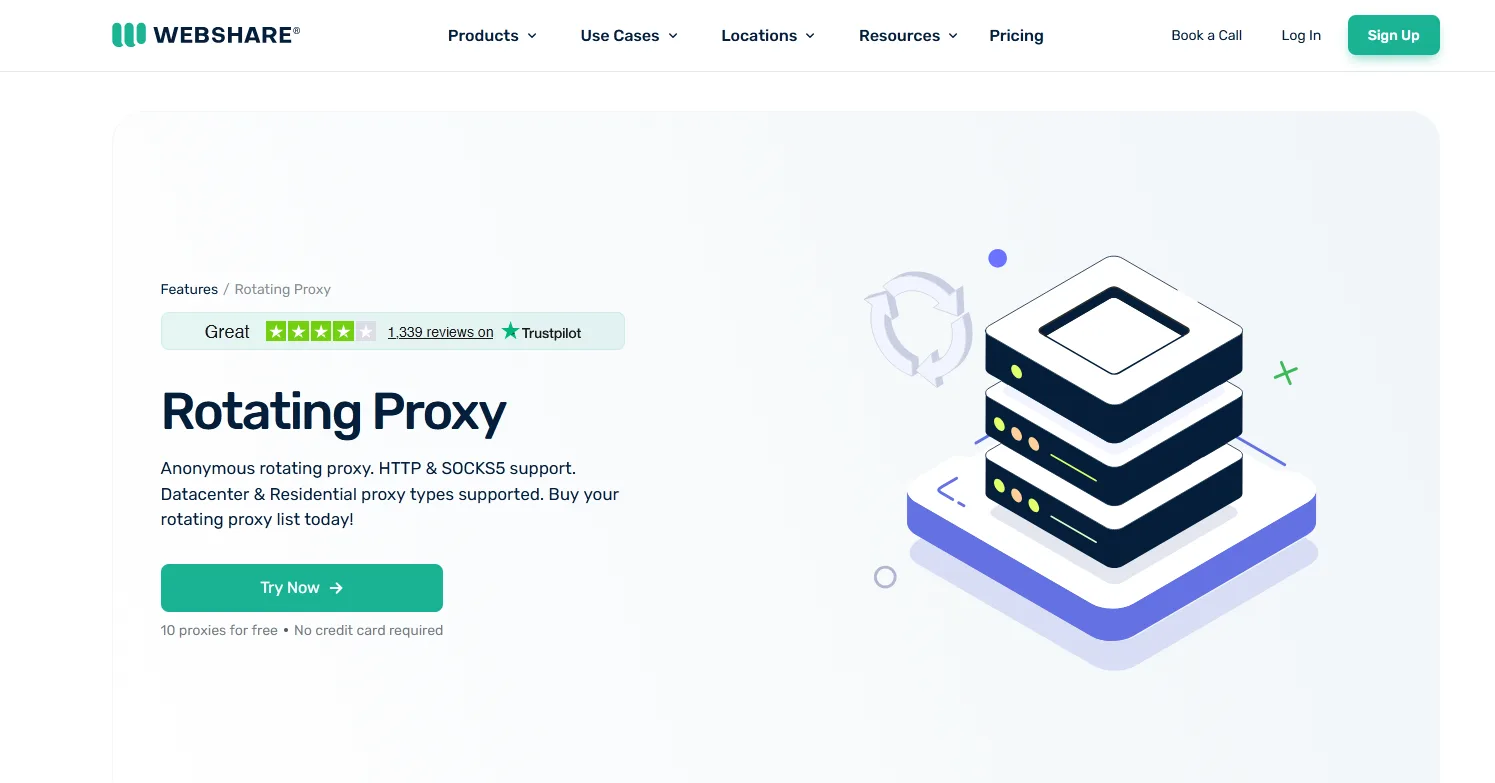
I chose Webshare for its entry-level appeal. It offers the best trial – ten free proxies and a gigabyte of monthly traffic without commitments. The catch is that these are static datacenter proxies, so scraping and geo-sensitive use cases are out.
However, I do think it’s a solid retention tactic. Inexperienced users can test whether their tools work correctly or set up their first automations. Once they’re more confident, they can conveniently commit to the rotating residential proxy network Webshare offers without shopping around for cheaper or more advanced alternatives.
12. Rayobyte
I genuinely care where and how providers source their proxies. While any reputable provider will claim ethical sourcing, few go to the same lengths as Rayobyte to vet IPs and maintain their image.
You’ll want to know how the provider you’re going with builds their IP networks, especially if you’re in a field like investment research or consumer rights advocacy where compliance matters as much as proxy quality.
13. Byteful
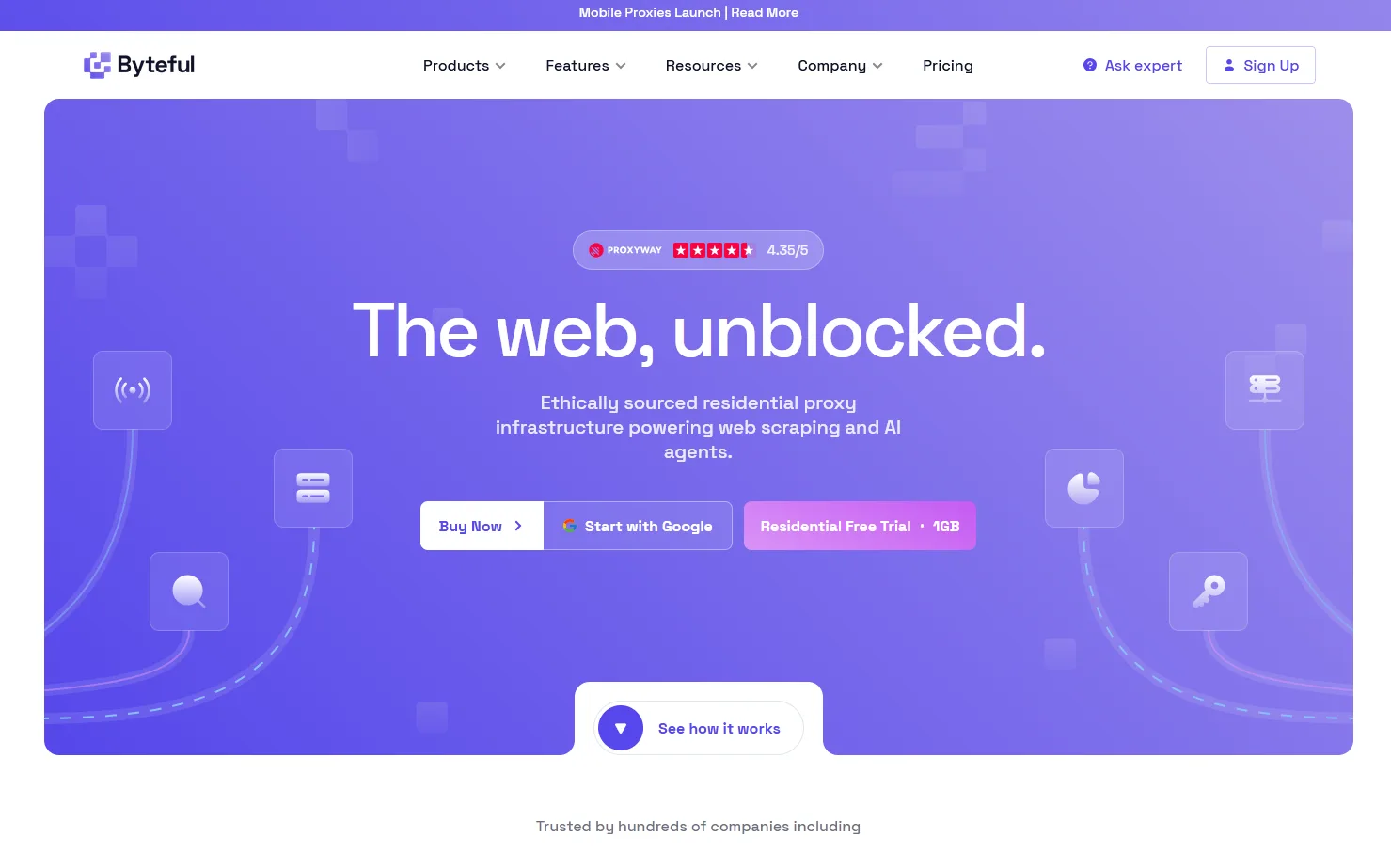
Some proxy providers are content to offer a single service. Others, like Decodo and now Byteful, go so far as to rebrand themselves to reflect their new direction. Byteful is still relatively unknown, but its original name – Ping Proxies – might ring a bell.
At its core, Byteful is still a rotation proxy provider with excellent support focused on low latency and stable sessions. On the other hand, the rebrand also introduced meaningful updates to its proxy infrastructure and access controls that make Byteful more appealing for team use.
Conclusion
If putting this list together has made anything clear for me, it’s that there are no silver bullets when it comes to choosing rotating proxies. Floppydata won because of a superbly-balanced feature set. However, it all comes down to picking the right fit for your use case, which consulting this list will hopefully help you with.