
Best Proxies for Training LLMs (ChatGPT, Perplexity, Copilot, Gemini, Claude, DeepSeek, etc.) in 2026

While many people still use them as such, LLMs have become far removed from their humble chatbot beginnings. They allow for quick creation of new training datasets and retrieval pipelines while also helping pave the way for the next wave, spearheaded by agentic AI.
Anyone who works on training and advancing these systems runs into a snag sooner or later. LLMs themselves are rarely the problem. Rather, the unrestricted access needed to support development adequately is. Proxies are the most straightforward and effective solution.
Why is this, or rather, what obstacles do proxies help sidestep when working with LLMs? Here’s everything you need to know, plus top recommendations, whether you just need a proxy for ChatGPT throttling or are building AI’s next big thing.
Why Do You Need Proxies for AI Data Collection and Training?
The average user will likely never have to bother with proxies when engaging with an LLM. However, requirements change dramatically for developers and automation teams who leverage these resources to evolve their AI tools.
Model training alone isn’t enough to advance modern AI development. Reliable and continuous access to huge quantities of data is essential to maintain model relevance and keep them from becoming biased. Interacting with LLMs and running the workflows surrounding them on a scale needed to sustain this inevitably leads to throttling and IP bans. That would ordinarily spell serious delays in or even the end of development, which is exactly where proxies come in.
How exactly startups, researchers, enterprises, etc., interact with LLMs depends on their goals. These can be as simple as AI-augmented data scraping or as advanced as building new AI agents. Here are some diverse examples:
Data scraping
The use case that comes to mind first. LLMs’ ability to summarize or extract important info goes great with traditional scraping techniques. A company building a gaming news aggregator might scrape relevant portals for the latest stories and then have ChatGPT provide summaries or sentiment analysis on comments. Without proxies, scraping requests fail because websites start throwing CAPTCHAs at you or blocking your IPs.
Synthetic data generation
Instead of spending lots of money and even more time waiting on human-generated data, you can use proxies to have LLMs create it at scale. For example, an appliance manufacturer can train its customer service chatbots by providing hundreds of thousands of customer interactions in different languages with Gemini. Proxies ensure this can be done quickly from multiple accounts without throttling.
Agentic AI
Among the most advanced applications since agents can take independent action but create a lot of web traffic. An agent tasked to find the best deals on travel websites that taps into Claude to interpret the data and give specific advice needs proxies to get past aggressive IP bans and retrieve geo-specific data.
Essentially, proxies make concurrent data gathering and usage possible and hassle-free, contributing significantly to any LLM training effort.
What Type of Proxy for Large Language Models Should You Use?
Each of the main four proxy types can be viable. Which one is best depends on factors like the concrete use case, how trigger-happy the anti-botting measures you’re dealing with are, your budget, etc. Here’s a breakdown:
- Datacenter proxies – IPs provided by cloud infrastructure or datacenters rather than ISPs are fast and cheap, which makes them easy to deploy and scale. The downside is that they’re the easiest to detect. Datacenter proxies make the most sense when generating data or dealing with high-volume, low-risk API calls.
- Residential proxies – IP addresses ISPs issue to real households are the LLM proxy sweet spot. Websites treat them like regular users visiting from an actual residence, meaning the trust factor is high while detection rates are low. Used for bread-and-butter tasks like training data collection, AI SEO research, and localization testing.
- ISP proxies – The go-to for when you need datacenter-like speeds without taking the accompanying IP address reputation hit. They’re expensive and not as widely available as the first two. Still, going ISP gives you the best proxy for Copilot testing and scenarios where persistence is important.
- Mobile proxies – Similar to residential proxies but even harder to detect since they’re sourced from genuine mobile providers. Mobile is the way to go if you need a proxy for Grok integration or any other social media-heavy work. Most users interact with social platforms on their smartphones, so trust is sky high.
The 6 Best Proxies for LLM Training in 2026
1. 1Browser
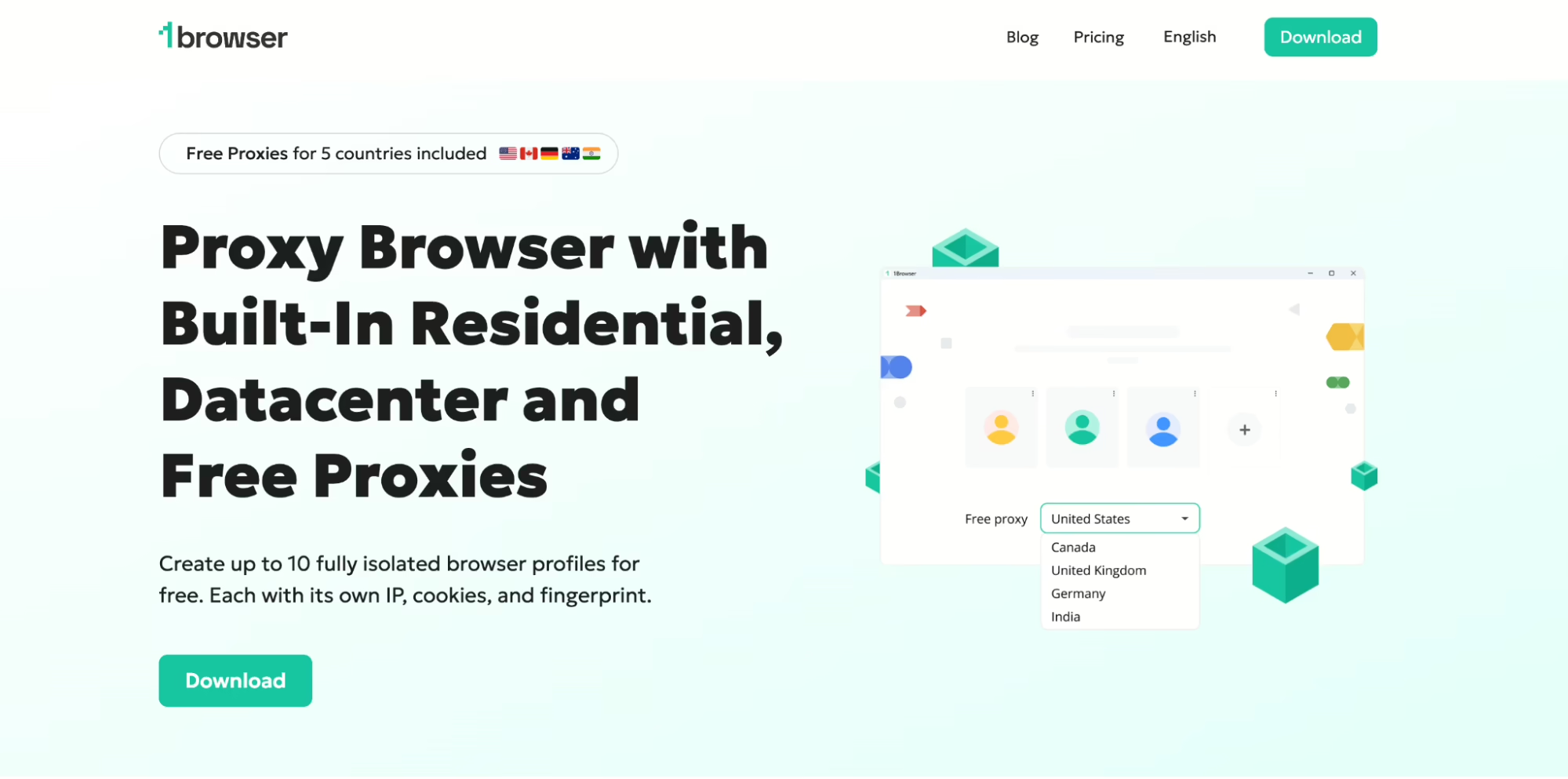
Access to high-quality yet affordable residential proxies is at 1Browser’s core. However, it goes beyond by providing the framework that enables the most complex LLM operations.
1Browser is an intuitive anti-detect browser as well as a proxy provider. Through it, you can set up isolated environments not just with separate IPs, but browser fingerprints and cookies. This makes 1Browser ideal for working with agentic AI.
It lets one startup or a single team of researchers run dozens of agents simultaneously. Each of these can interact with websites, SaaS platforms, GUIs, etc., without causing session conflicts or triggering advanced anti-bot measures.
2. Floppydata
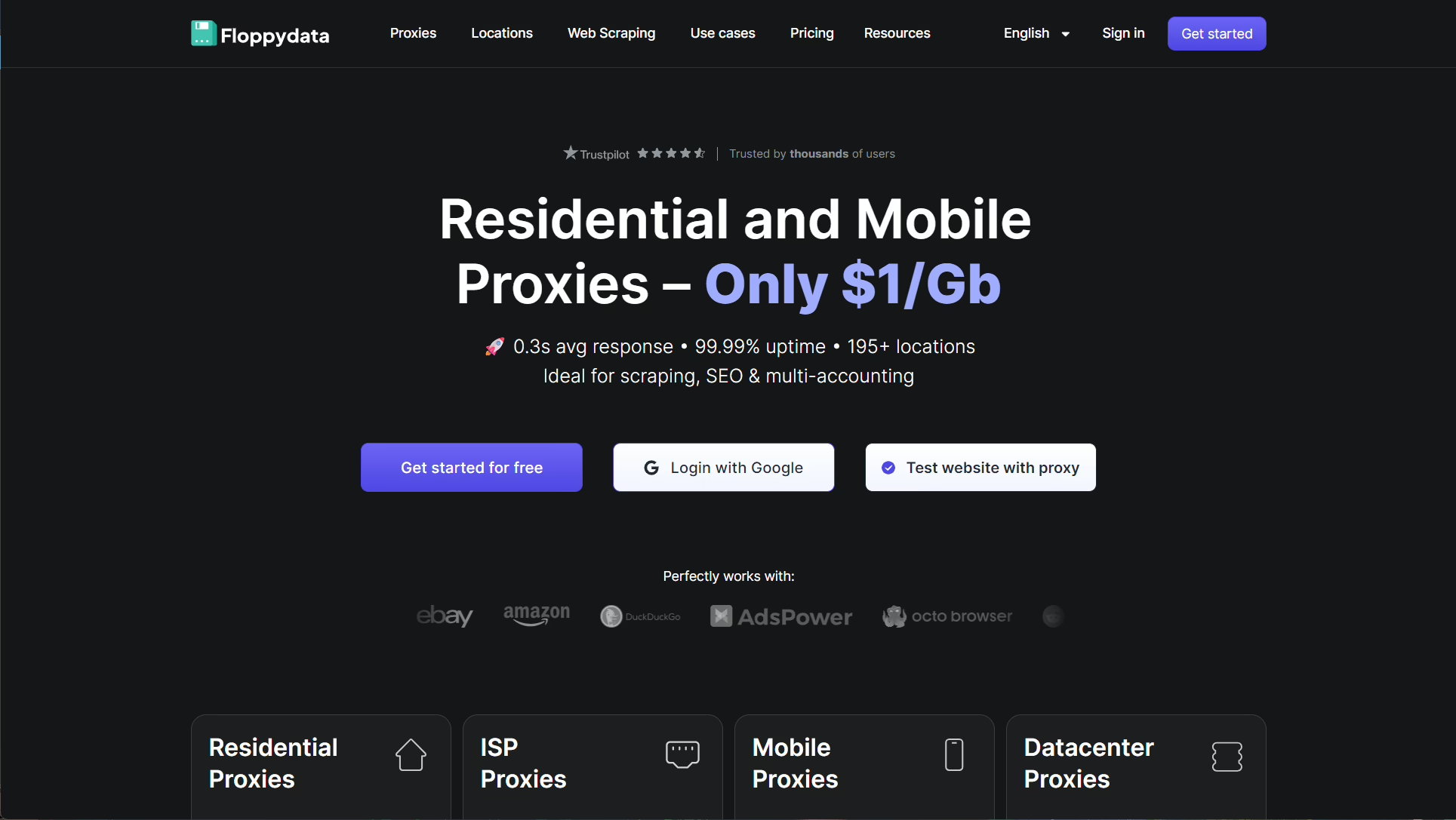
LLM-related training and scraping costs rack up fast. That means most established proxy providers aren’t a good fit for students, independent researchers, and early-stage startups. Floppydata is an outlier since you can get access to its healthy rotating residential proxy pool for $1 per gigabyte.
Since they’re both cost-effective solutions, the most natural fit would be to use Floppydata as a proxy for DeepSeek. That said, any training activity that involves experimentation or budget-conscious scaling will be easier to implement when you’re not paying a premium.
3. Bright Data
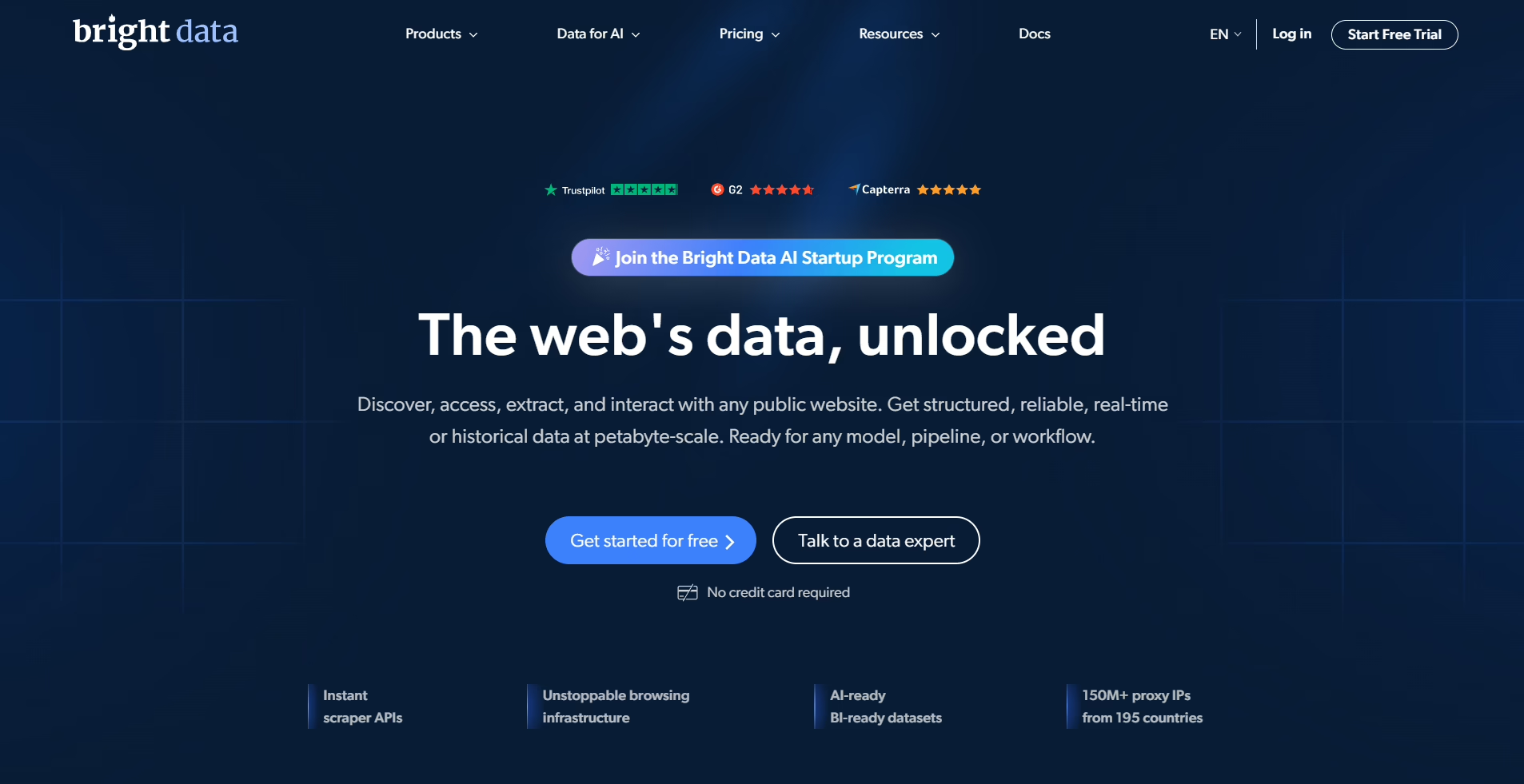
Bright Data has a lot going for it: brand recognition, a larger datacenter pool than the competition, and widespread coverage. It’s a good solution for enterprise-grade clients, and the pricing shows as much. The platform itself takes a while to master, so it’s not as beginner-friendly as most alternatives, let alone 1Browser.
Bright Data is a good match if you’re a seasoned enterprise client looking for a proxy for Perplexity or have other use cases where the need for compliant infrastructure and structured data extraction at scale trump cost concerns.
4. Oxylabs
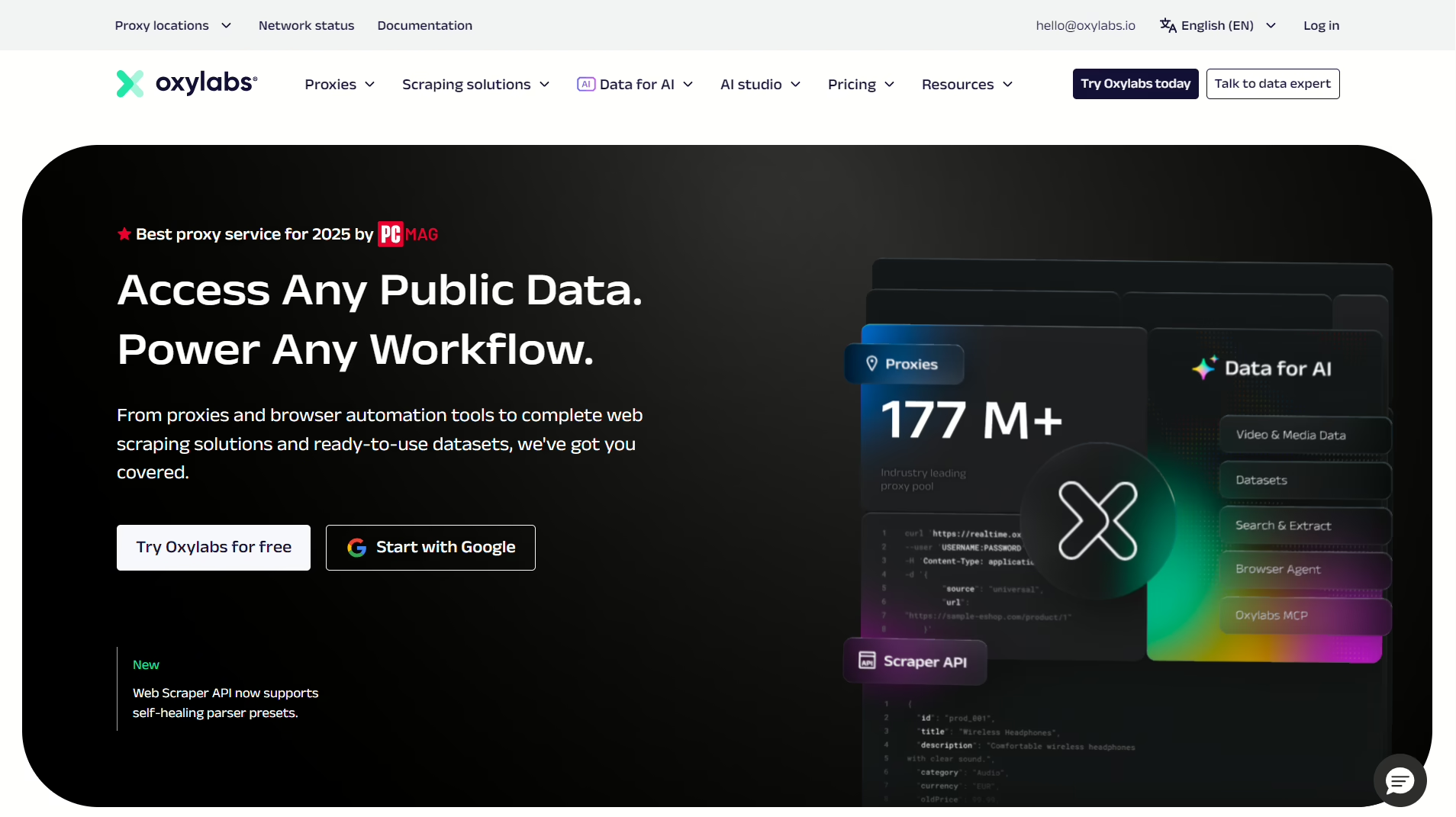
Bright Data touts itself as the everything solution for clients with deep pockets. Oxylabs has similar pricing, which it justifies by claiming to employ the most advanced anti-bot bypass measures. A strong reputation for long uptimes and reliability of its residential and ISP proxies means Oxylabs is definitely a strong contender.
Combined with the above, Oxylabs’ global coverage makes it a compelling proxy for Gemini users. Since Gemini is part of the larger Alphabet ecosystem, it makes sense to leverage Oxylabs’ infrastructure for output comparisons between countries, testing different local responses from anywhere, etc.
5. Decodo
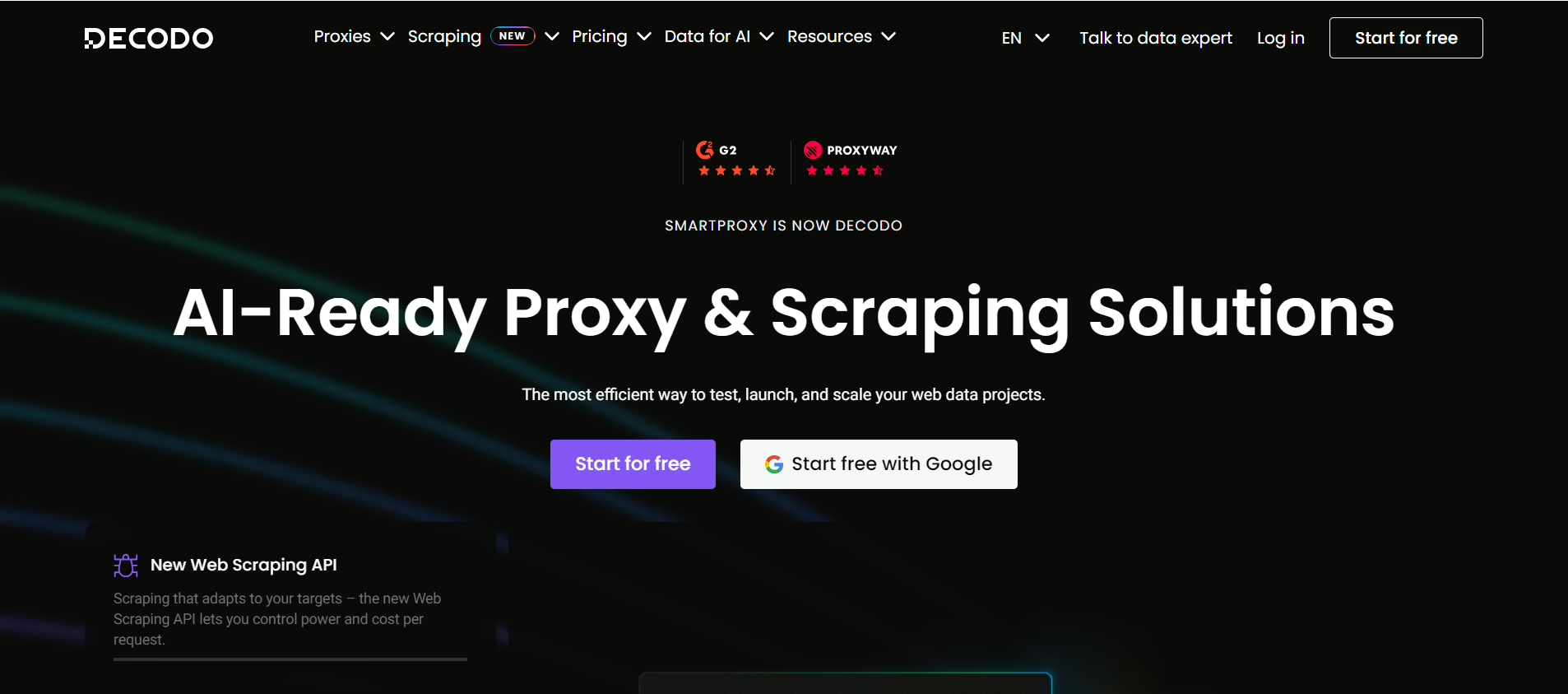
Most proxy providers are integrating AI into their marketing, if nothing else. After its rebrand from Smartproxy, Decodo’s pivot was more concrete. It has an LLM-augmented parser that can make sense of scrambled HTML data and integrates well with various AI orchestration tools.
This familiarity positions Decodo as a natural proxy for Claude or tasks that require data structured for research or RAG workflows. The main thing holding it back is pricing, which matches Bright Data and Oxylabs if you don’t seriously commit for the long term.
6. NetNut
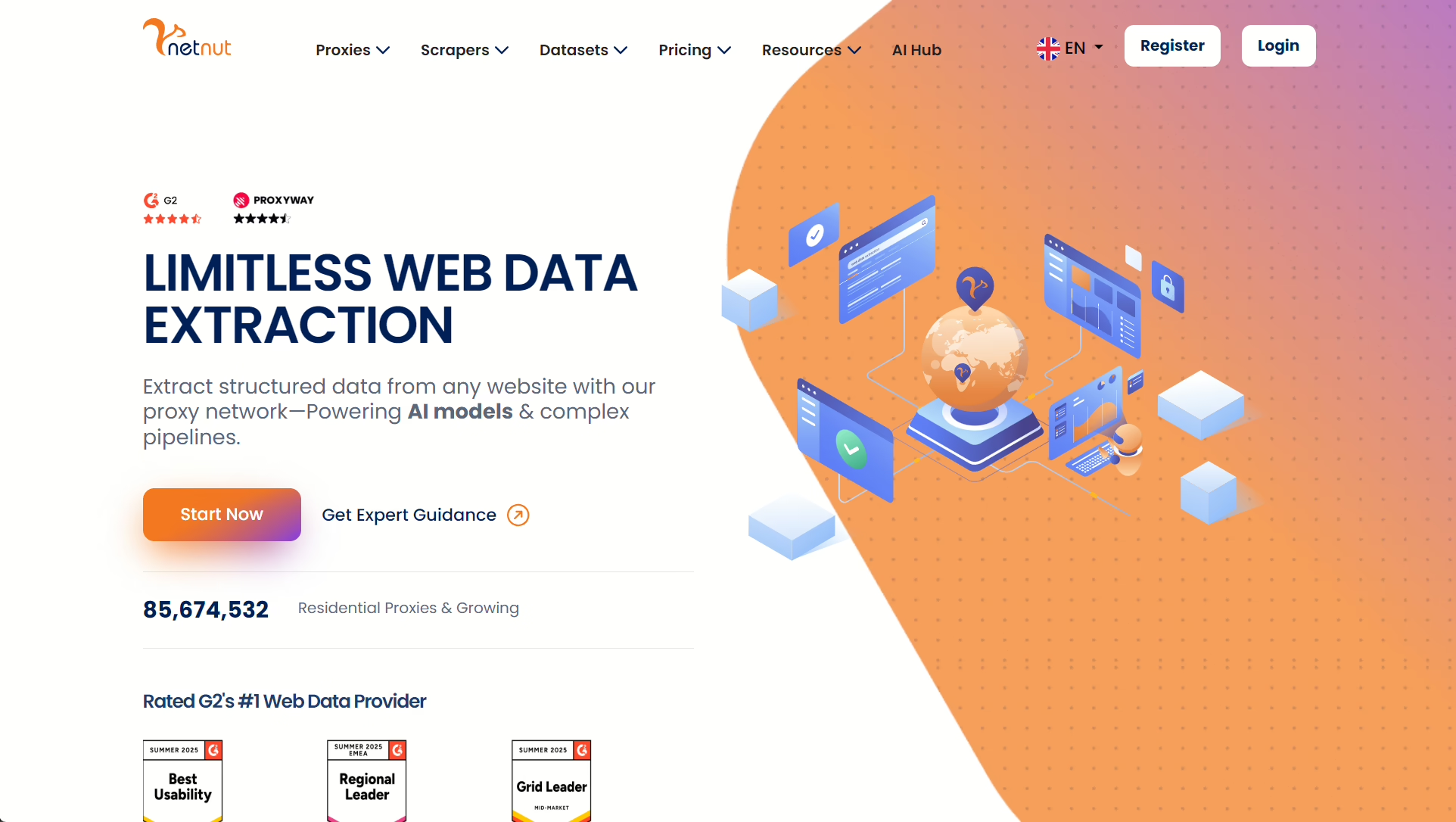
What NetNut lacks in terms of raw numbers, it makes up for in stability. Specifically, its focus on ISP proxy infrastructure lets you set up AI agents that need to be continuously logged into and export data from a website or service. NetNut’s ISP proxies are also an adequate solution for automating interactions with websites like job boards or booking systems that aren’t as unreasonably sensitive as social media platforms.
NetNut is more niche than the others, and its proxy pool is on the smaller side.
Conclusion
If AI’s rapid evolution has shown us anything, it’s that dependence on vast and available data sources has become even more important than previously imagined. At such scales, sustained data access starts to become far more important than your standard models and prompts. A proxy for LLM workflows is now a vital part of the infrastructure, and 1Browser sets itself apart as the clear first choice.