
Best Proxies for Online Casino and iGaming: How to Choose and How to Use

Nobody in the iGaming industry talks openly about proxies and I think that’s weird because everyone uses them. I’ve been working the affiliate side of online casinos for a bit over two years and in that time I don’t think I’ve gone a single workday without connecting through a proxy of some kind.
Checking if a landing page shows the right deposit bonus in Spain, verifying that the German version of a sportsbook isn’t displaying offers that violate the GlüNeuRStV, pulling odds data from bookmakers in four countries before lunch. All of that needs proxies for online casino work and nobody writes about it because I guess they assume everyone already knows.
I didn’t. When I started I ran everything from my home IP in Portugal. Got my first three affiliate accounts flagged in the first month because platforms saw a Portuguese IP accessing UK and Swedish dashboards.
One of those accounts never got reinstated. Lost maybe €400 in pending commissions because I didn’t understand how geo-restrictions work on the operator side. Expensive lesson.
Anyway, this is everything I wish someone had told me about proxies for iGaming before I started burning through accounts and money.
What Do You Actually Need Proxies for in iGaming?
The list is longer than most people expect. These are the ones I deal with personally, usually multiple times a week:
- Compliance and geo-verification. Every regulated market has its own rules about what players can see. The UK needs UKGC-compliant content. Germany has the interstate treaty stuff. Ontario has its own set of requirements that don’t match the rest of Canada.
You need to see exactly what a player in each market sees, and the only way to do that from your desk is a proxy for online casino content verification. I once found a live casino page serving a welcome offer that had been banned in Germany three months earlier. Was still alive. Nobody on the team had checked because nobody had a German IP. - Odds scraping and line monitoring. Sportsbooks adjust odds by region. I track lines on maybe 20 bookmakers across five markets and the numbers are different depending on where you connect from.
Last month I caught a difference of 0.35 on a Champions League match between the UK and Italian version of the same operator. You need residential or mobile IPs for this because the datacenter gets detected instantly by any serious betting platform. - Affiliate multi-accounting. If you run campaigns across multiple brands in different countries each affiliate account needs to look like it’s based in the right jurisdiction.
Logging into a Maltese operator panel and a Swedish one from the same IP on the same day is how you get both accounts frozen. I know because I did it. The Swedish one took eleven days to unfreeze. - Ad monitoring. You need to see what your competitor’s ads look like in markets you’re targeting. I found a competing affiliate running an almost identical ad copy to mine on a Spanish network. Geo-targeted to ES only so I never would have seen it without a proxy for betting site ad verification.
- Payment method testing. Every market has different payment options. Klarna in Sweden, Sofort in Germany, Interac in Canada, iDEAL in the Netherlands. You have to verify deposits and withdrawals work correctly with each one.
I’ve seen checkout flows that threw errors exclusively on Dutch IPs because someone misconfigured the iDEAL integration and nobody tested it locally. - SEO tracking. Google SERPs are different in every country. If you’re doing casino SEO you need to see real local rankings, not what a rank tracker approximates from a datacenter somewhere.
Which Proxy Types Are Best for iGaming?
I’ve used all four main types. They’re not interchangeable.
Mobile Proxies – Most Important for iGaming
Traffic from real 4G/5G connections on actual carrier networks. This is the proxy type that iGaming platforms have the hardest time detecting because the IP looks like a real person on their phone.
For anything that involves interacting with the actual casino or sportsbook – account creation, deposit testing, verifying the player experience – mobile is what you want.
Most expensive type but for best proxies for iGaming use cases the detection rate is basically zero. I’ve never been flagged on a mobile IP. Not once in two years.
Residential Proxies
IPs from real home connections. Cheaper than mobile, still very hard to detect. This is what I use for volume work like odds scraping where I need thousands of IPs rotating fast. Most platforms can’t tell the difference between a residential proxy and a real user on their home WiFi, which is the whole point.
ISP Proxies
Static IPs from real ISPs but hosted in datacenters. Fast and stable. Good for accounts you log into every day and need a consistent IP for. I use these for affiliate dashboards where I need the same UK IP every morning so the platform doesn’t think I’m traveling.
Datacenter Proxies
Cheap, fast, detected by everything. I only use the datacenter for scraping public-facing pages that don’t require login. For anything that touches an actual casino account or a proxy for betting site access, datacenter IPs will get you blocked immediately. Most iGaming platforms have had datacenter detection for years now.
8 Best Proxy Providers for Online Casino and iGaming
1. 1Browser
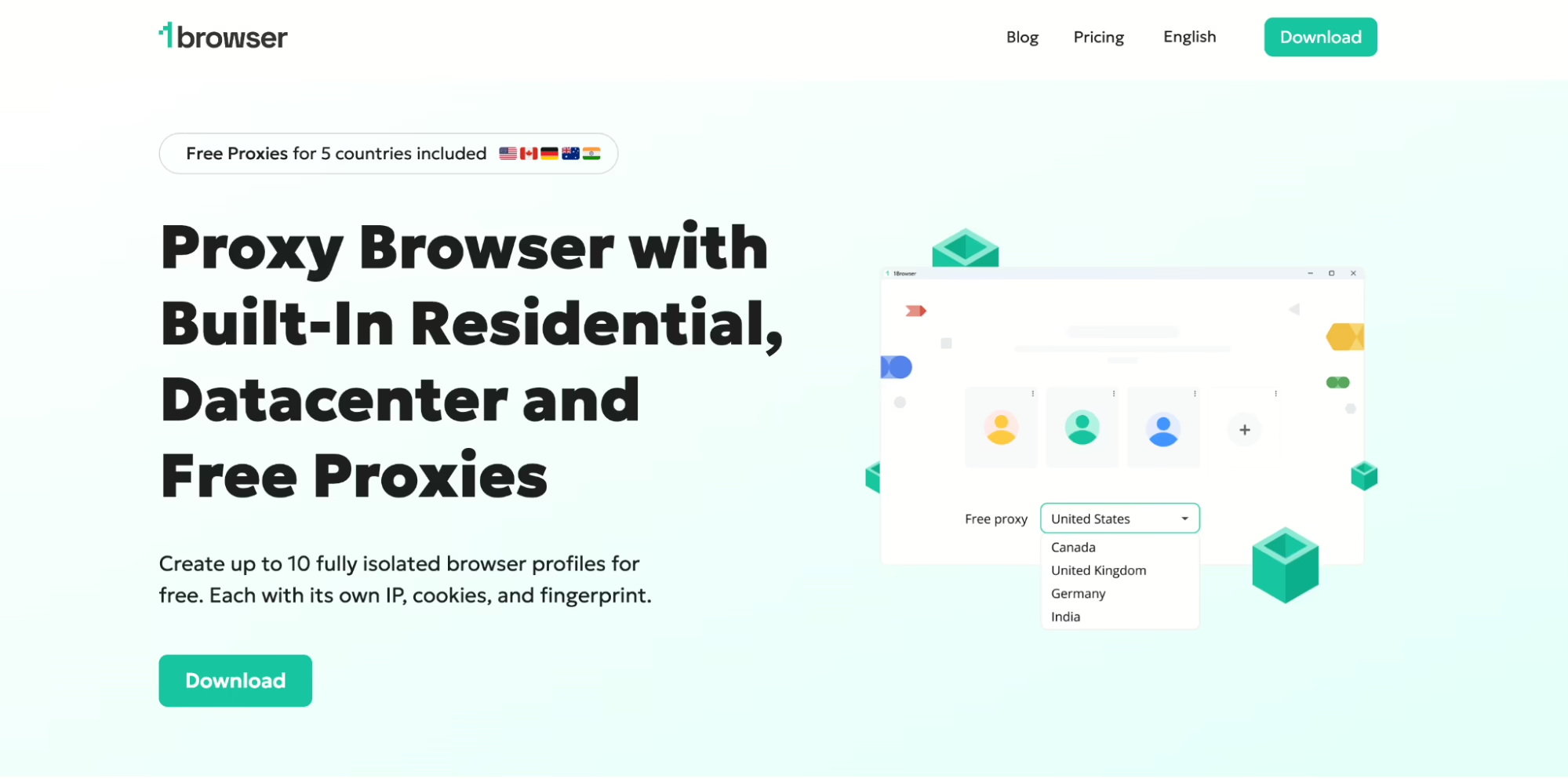
Not just a proxy provider. 1Browser is an antidetect browser with proxies already inside it. I know I keep saying this but the proxy is only half the problem in iGaming. Platforms check your fingerprint, your canvas, your timezone, your WebGL hash.
I got caught once because my IP said UK but my system language was set to pt-PT. Took me a while to figure out what triggered the flag. 1Browser prevents this by giving every profile its own complete identity.
I run profiles for the UK, Germany, Spain, Italy, Canada, Sweden and a couple more. Each one has its own fingerprint, cookies, proxy, timezone, language.
To operators each profile is a completely different person. The free plan gives you 10 profiles with proxies in 5 countries. Paid is $9/mo. I was on free for four months before upgrading.
2. Floppydata
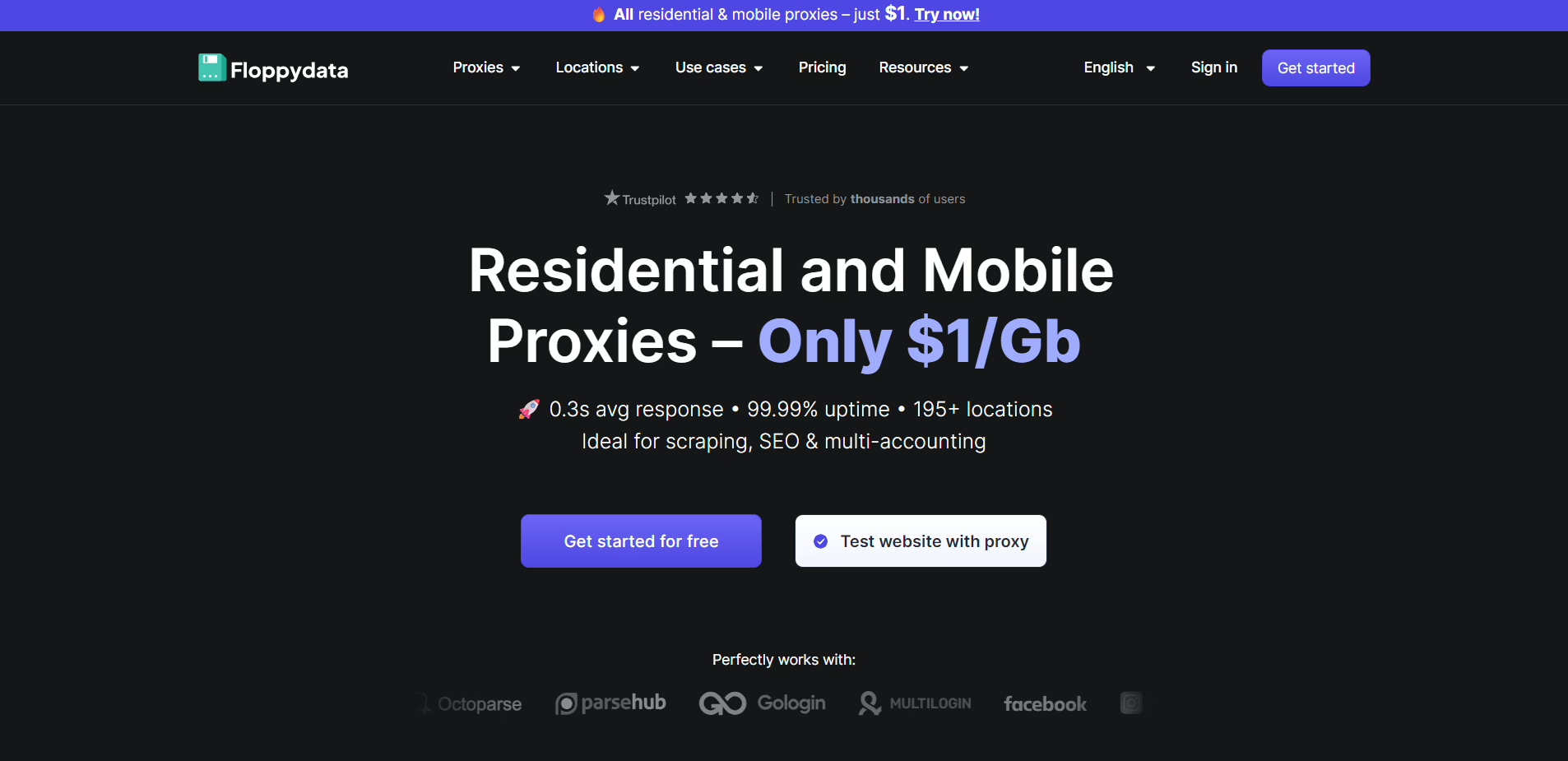
Standalone residential proxies for when I need volume. I plug Floppydata into 1Browser profiles for markets that aren’t covered by the free proxy list. Their pool is big, I’ve scraped odds from 25+ sportsbooks for five hours straight without getting a repeated IP.
City-level geo-targeting in most European markets which matters for regulated jurisdictions. Germany alone has different rules per Bundesland so being able to target Hamburg versus Berlin versus Munich actually matters.
Pricing is per GB. I spend around €30-50/mo depending on how much scraping I do. For the 1Browser plus Floppydata combo as the best proxies for iGaming setup, I haven’t found anything better at this price range.
3. Oxylabs
Enterprise tier. Massive pool, excellent uptime, city-level targeting that actually works. I used it for a large-scale project where I needed to pull data from hundreds of sportsbooks simultaneously across eight markets.
Handled it without issues. But pricing is enterprise too. If you’re a solo affiliate this is overkill. If you’re an agency or operator with a budget it’s the most reliable option I’ve tested.
4. Bright Data
Formerly Luminati. Biggest residential network in the world, something like 72 million IPs. Every proxy type available. Their Web Unlocker is useful for scraping platforms with aggressive anti-bot.
The dashboard is confusing though, I spent two days figuring out the rotation settings when I first signed up. Starting around $500/mo for anything serious so this is another enterprise option.
5. Decodo (Smartproxy)
Good middle ground. 55+ million residential IPs, pricing that’s actually approachable compared to Oxylabs and Bright Data. I used it for ad verification across European markets for about three months and it was solid.
Their mobile proxy product is newer and the pool is smaller than residential but growing. For iGaming affiliates who need decent coverage without enterprise pricing this is probably the sweet spot.
6. IPRoyal
Cheap. Like genuinely cheap for what you get. The pool is smaller than the big names but for affiliate-level work it’s more than enough. I ran them as a backup for about four months.
Quality was fine, not exceptional but fine. Decent mobile proxies too. Good proxy for betting site verification when you’re watching costs and don’t need enterprise scale.
7. ProxyEmpire
One of the few providers that actually mentions iGaming and casino in their marketing which tells me they know who their users are. High concurrency on rotating residential, city-level targeting, simple dashboard.
I tested them next to Floppydata for an odds scraping job and the performance was comparable. Pool isn’t the biggest but targeting accuracy in casino-relevant European markets was solid.
8. SOAX
SOAX does carrier-level mobile targeting which nobody else on this list offers at the same granularity. You pick the country, the carrier, the connection type.
I used their mobile proxies to test a client’s sportsbook app on Vodafone UK, EE, and O2 separately. Found a loading issue on O2 that wasn’t happening on the other carriers. The client had no idea. Pricing starts around $6/GB for mobile which is reasonable.
How to Choose the Right Proxy for Online Casino Work
- Multi-account management across markets: 1Browser. Proxy plus fingerprint in one tool, nothing else does this at the free tier.
- Odds scraping and data at volume: Floppydata for mid-range budget, Oxylabs if money isn’t an issue.
- Mobile app testing on specific carriers: SOAX. The carrier targeting is unmatched.
- Ad verification without overspending: Smartproxy or IPRoyal.
- Starting out in one or two markets: 1Browser free plan. Five countries, ten profiles, no card. I ran my entire operation on this for the first four months.
If I had to pick two tools: 1Browser for profiles and proxy access, Floppydata for residential IPs in markets the free plan doesn’t cover. That’s what I use. That’s what I’d tell anyone getting into this to start with. The enterprise stuff is great but if you’re reading an article like this you’re probably not there yet and that’s fine.