
What Are Residential Proxies? Differences vs Mobile Proxies, Datacenter Proxies, and VPNs?

The proxy server market is expected to grow to $5.24 billion by 2033, and its steady growth is linked to use cases such as social media automation, e-commerce price monitoring, ad verification, and web scraping. Residential proxy servers are among the most popular types because they use authentic ISP-provided IP addresses.
Anything you do on the internet, like watching The Beast in Me on Netflix, playing Battlefield 6 online, or browsing Amazon and Zalando for Black Friday deals, leaves a trace of your activity. Your IP address reveals a lot to a knowledgeable web server admin. While that might not be an issue in everyday use, if your business needs to gather competitor information or bypass geo-restricted services, you will need help from proxy servers.
All proxies act as a middleman between your client device and the destination server hosting the targeted website. Because you reroute your traffic through a proxy server and get an IP address from it, the visited website thinks it is your identity.
What are residential proxies?
There are many proxy types, and the basic division is residential, mobile, and datacenter.
Residential proxies are arguably most effective because they use real home internet connections, so you will get authentic IP addresses assigned to users from their ISPs. Because of that, residential proxies have a high trust, and servers rarely block them.
To reiterate, when you use a proxy server, your traffic is rerouted to another IP address, masking your location and identity from the destination website.
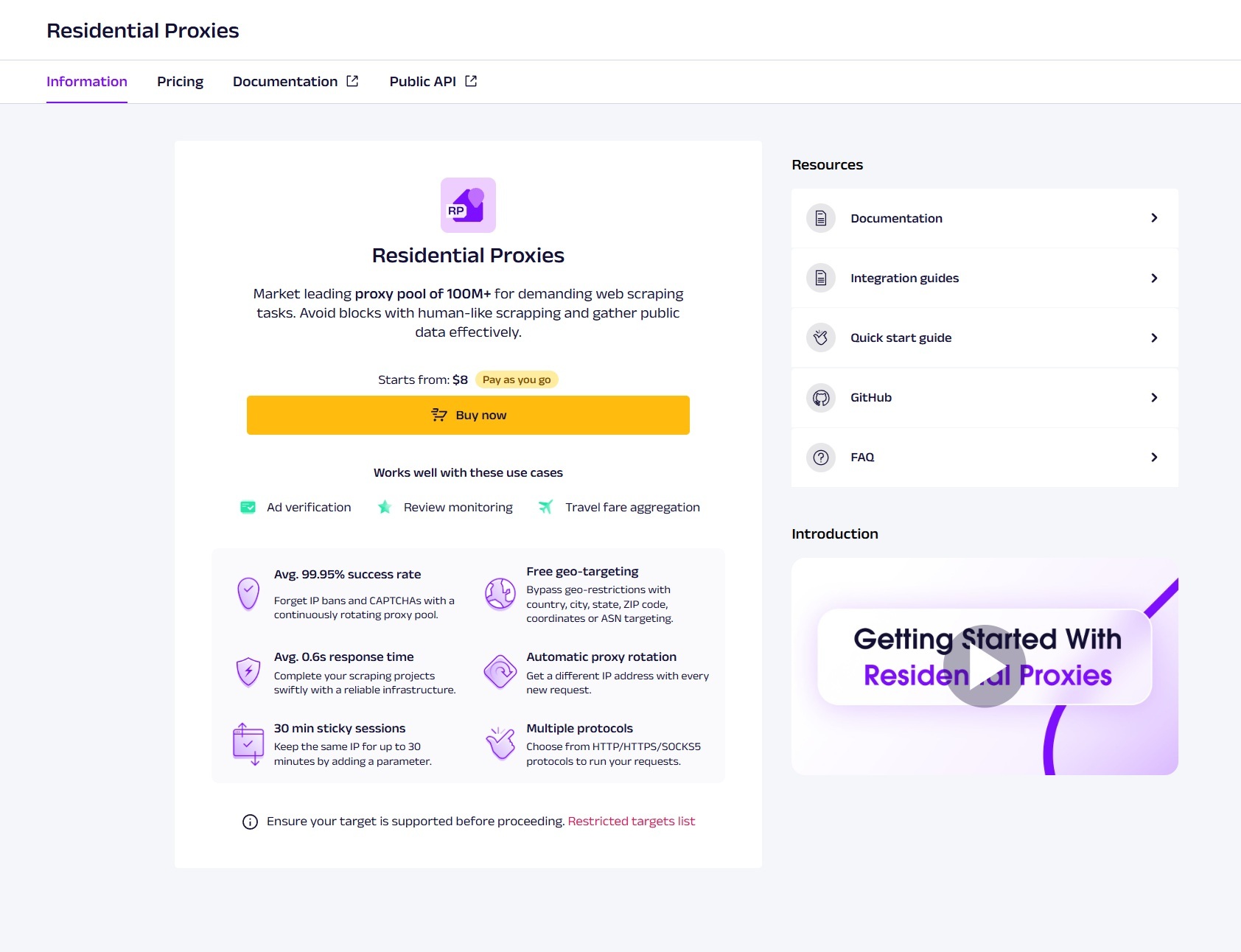
When you use a residential proxy, you can choose between millions of IP addresses from around the world. In most cases, providers offer rotating IP addresses, meaning they change every few minutes or with every request. Because all of these IPs come from ISPs, these requests sent to servers hosting websites seem legitimate.
That brings us to the most common use cases for residential proxies.
What are residential proxies used for?
Regular users can use proxy servers to access georestricted content, such as streaming service libraries, or to buy on an online shop outside their country. However, if you use residential proxies, you most likely need more complex tasks. Sending a high volume of requests might lead to your IP being blocked, so residential proxies are a great way to avoid that and still get things done. Here are some of the most common use cases for residential proxies:
- Social media management and automation– Social media automation and account farming are something platforms like Instagram, X, or TikTok don’t like, and their algorithms regularly block datacenter IPs and VPNs. Since residential IPs appear to be real users, they are rarely banned.
- E-commerce and competitor price monitoring– For an e-commerce owner, monitoring competitors’ pricing is crucial in a highly competitive landscape. Big players like Amazon, Target, or Zara have advanced protection against scraping, and datacenter IPs are not effective for this task. To gain insight into competitive pricing and new items, most marketers use residential proxies that are less likely to be flagged by ISPs.
- Marketing and advertising– Marketing departments also use proxies to check how their brands or products appear in different countries. Similarly, advertisers can use residential proxies to verify that their ads are displayed correctly across various locations and markets without being flagged as bots.
- SEO and SERP tracking– Residential proxies are also helpful with SEO and SERP tracking to get authentic results by location. It supports local SEO efforts and precise ranking checks.
- Web scraping– You can send millions of requests without being blocked. Residential proxies are ideal for large-scale data collection for business intelligence.
Why choose residential proxies?
Any personal or business use that might get blocked is where proxies can be helpful. If you want to get exclusive sneakers through sneaker copping or avoid anti-bot algorithms from social media outlets and e-commerce sites, you should consider using residential proxies.
They are a sweet spot in the proxy world, offering high trust with authentic ISPs assigned IP addresses, medium to high speeds, and, while relatively expensive, still cheaper than mobile proxies.
Pros and cons
Pros:
– Authentic ISP-assigned IP addresses
– High trust level that usually successfully avoids bans
– Medium speed
Cons:
– Slower than datacenter proxies
– Expensive
Best For:
– Social media automation, e-commerce price monitoring, ad verification, web scraping,
Residential vs mobile proxies, datacenter proxies, and VPNs
The essential difference between the different types of proxies is how they obtain IP addresses. They also get different pricing, use cases, and trust levels.
What mobile proxies bring to the table?
Mobile proxies are, in a way, similar to residential proxies. They get IP addresses from cellular network providers, unlike residential users who get them from ISPs for home internet connections. Carriers reuse the same IP Addresses across hundreds of phones every few minutes, so servers can’t assign them to a single user. Moreover, blocking an IP address can affect other users, so mobile proxies are hardly ever banned, and there are no public blacklists.
However, mobile proxies do have drawbacks. Most notably, these services are by far the most expensive and offer slower speeds. If you need to bypass the strongest anti-bot systems or use them on the strictest platforms like TikTok or Instagram for bulk actions, you might go with mobile proxies.
Pros and cons
Pros:
– Use real cellular IPs from mobile carriers
– High trust
– Almost impossible to detect
Cons:
– Very expensive
– Slower speeds
Best for:
– Bypassing top anti-bot systems and platforms
Datacenter proxies are cheap and fast
If you’re looking for speed and reliability, datacenter proxies are the best solution. This option is also the cheapest. So, why isn’t everyone using data center proxy servers? The main limitation is the source of their IP addresses. Datacenter proxies get their IPs, as their name suggests, from data centers such as AWS and Google Cloud.
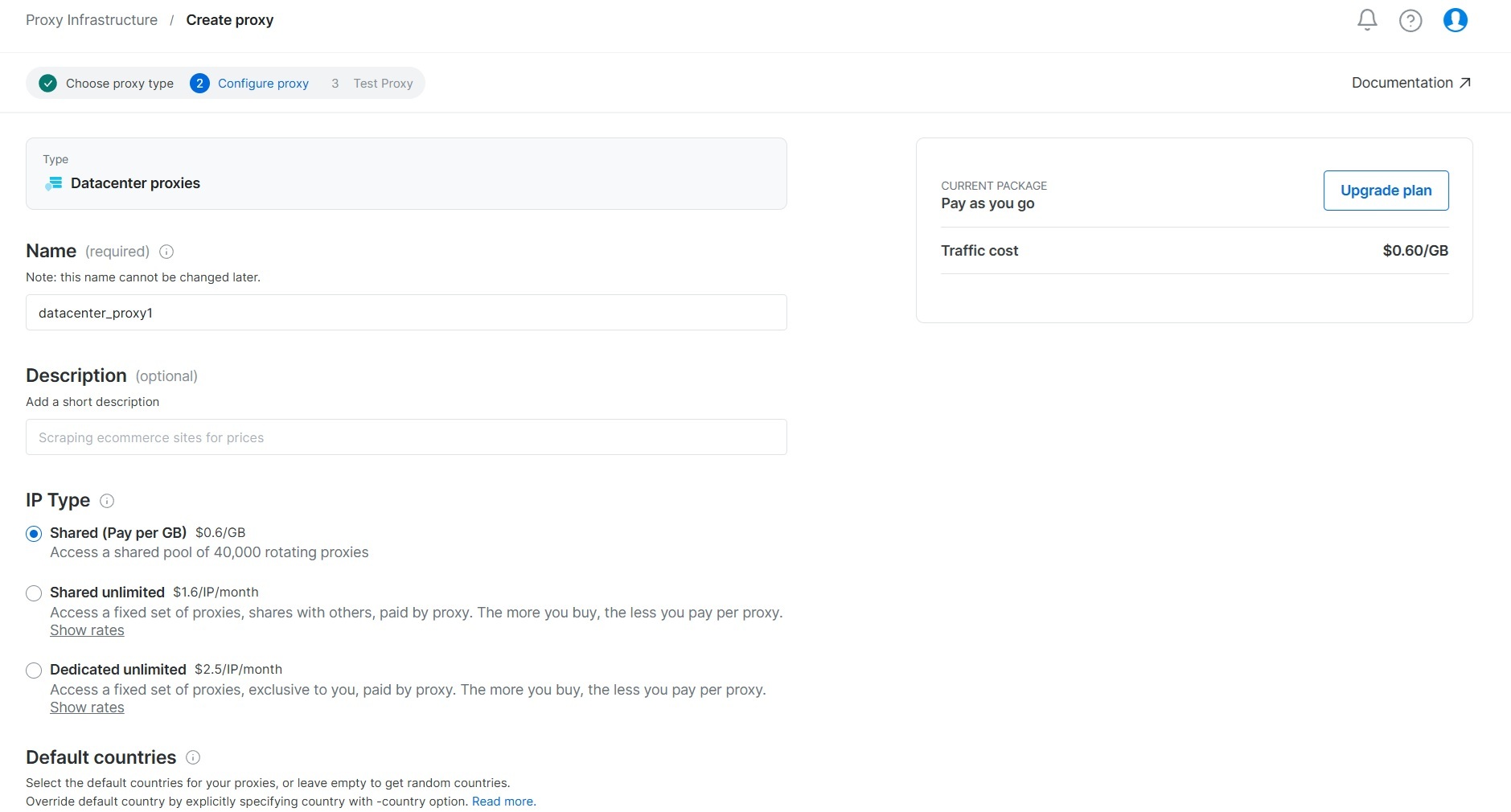
Because they don’t appear as regular users, websites can easily detect and block them. There are also elaborate blacklists for such IP addresses. Datacenter proxies can have static or rotating IP addresses, and another benefit is their sheer number. You can use them for SEO tools or tasks where bans are not a big deal.
Pros and cons
Pros:
– Very fast with low latency
– Affordable
– Reliable connection
Cons:
– Easily detected and blocked
– Low trust
Best for:
– SEO tools and tasks that need high speed
Is VPN better than a proxy?
VPN is similar to a proxy server, but has a different purpose. While it does mask the IP address and lets you choose from global locations, the goal of VPN is security. Unlike most proxies, VPN also encrypts the data you send. VPNs are fast and reliable, but most are on the public blacklists and are not suitable for professional bulk actions. You can get increased security, use it to bypass geo-restrictions, and watch streaming services and other content.
Pros and cons
Pros:
– Very fast
– Increases data security
Cons:
– Easily detected by platforms with robust anti-bot measures
– No IP rotation
Best For:
– Personal privacy
– Streaming services and browsing
How do you use a proxy server?
Using a proxy server is relatively straightforward. The most challenging part is choosing the best provider. Once you’ve found a suitable proxy server, you will need to select a free service or buy a plan, then download the app or enable a browser extension.
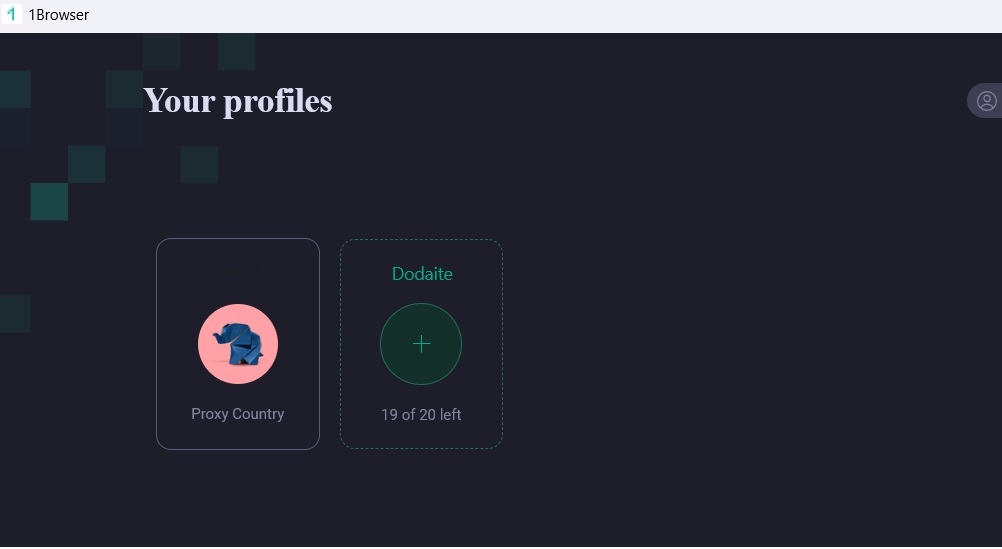
After you create an account, depending on your free or paid plan and proxy options, you can create a profile, choose the proxy type, location, and other settings.
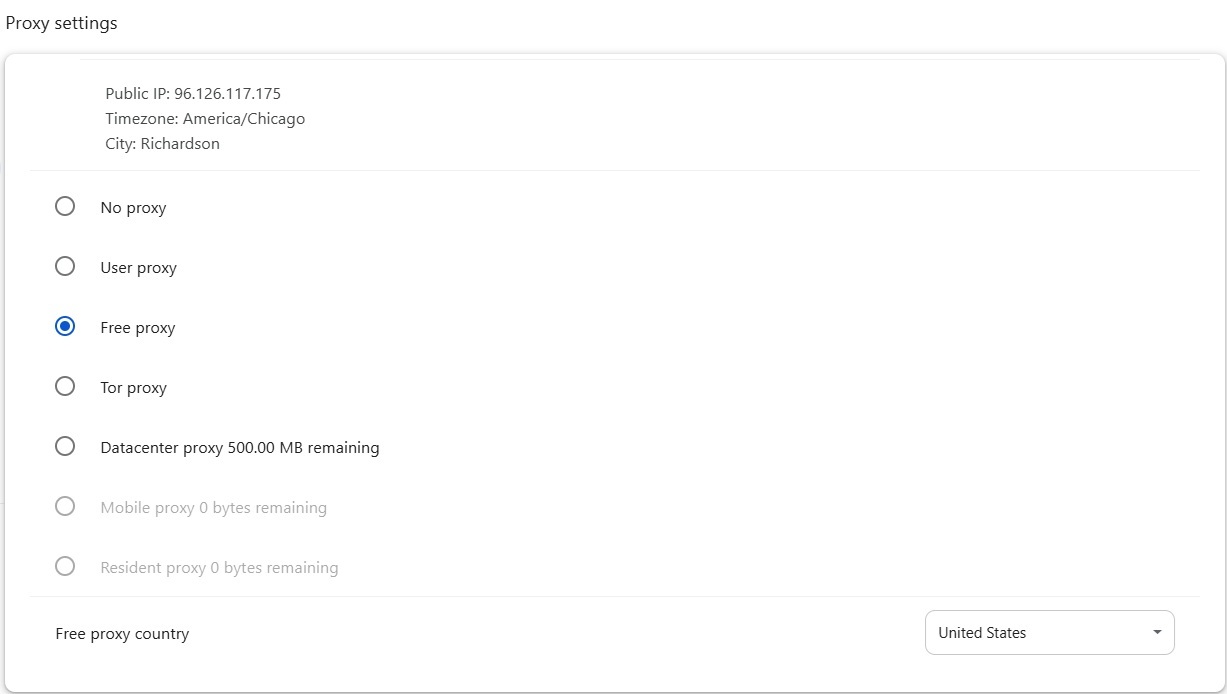
After that, you can browse just like without a proxy service, except you changed the location and IP address. A paid proxy service unlocks the full potential, and you can choose IPs from almost any country.
Why is VPN different?
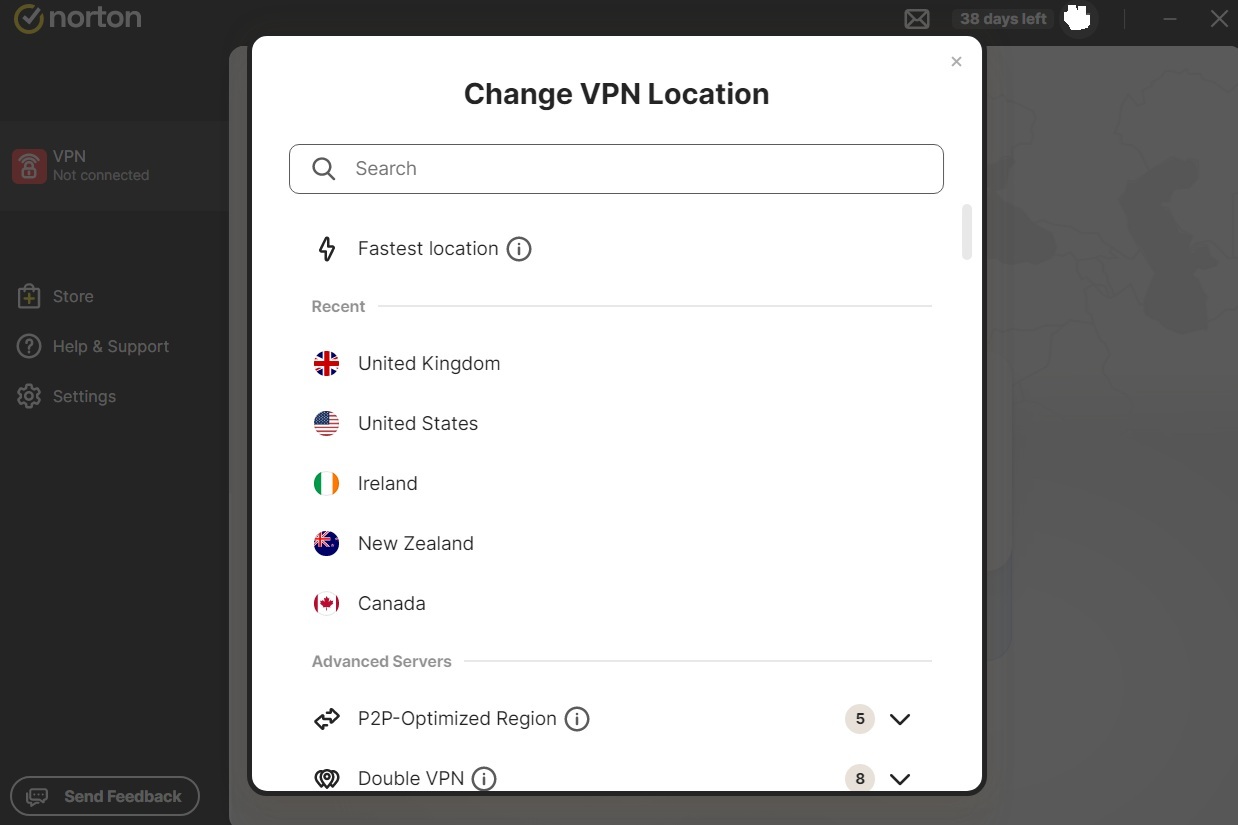
Unlike app-specific proxy servers, once you activate VPN and connect to another location and IP address, the entire system is connected to that location and IP address. So, whatever you do on the computer, you will appear to be from another location with an alternative IP address. Most VPNs use datacenter IPs and are not suitable for advanced scenarios with thousands of continuous requests, as they are more easily detected.
Conclusion
Residential proxies are the most effective type because they use real IP addresses assigned by Internet Service Providers. Aside from the authenticity and high trust, they are hard to detect and offer decent to fast service. The pricing might be its biggest drawback, but for professional marketeers, social media influencers, or sneaker coppers, it might be the best option.
Everyday users can rely on fast, affordable datacenter proxies, while costly mobile proxy servers can help with robust anti-bot systems. VPNs, on the other hand, provide similar functionality but are more focused on data security and are not ideal for data collection or anti-detect use cases.